
Americans who plan carefully tend to arrive in Spain with the incapacity side of their affairs already covered at home: a durable power of attorney so someone can manage the money if they cannot, a healthcare proxy or living will for medical decisions, and clear instructions for the family. The natural assumption is that this travels with you, just like the will. And just like the will, it mostly does not travel as cleanly as people expect. The documents were drafted to be read by a US institution under US law. The moment the people who need to act on them are a Spanish notary, a Spanish bank or a Spanish hospital, the question becomes whether those local actors can — and will — follow a foreign instruction quickly, at the exact moment speed matters most.
This is a different problem from your Spanish will, which deals with what happens after death. Incapacity planning is about a harder, earlier moment: you are alive but cannot sign, and someone needs to pay the bills, deal with the bank, or agree to a course of treatment. Spain overhauled exactly this area of law in 2021, and the tools it now offers are worth understanding before you assume your US paperwork is enough. This guide is general information for non-lucrative visa holders, not legal or medical advice, and it does not replace coordinated advice from a US attorney and a Spanish lawyer — but it should make that conversation far more productive.
On this page
Incapacity is a separate question from succession What Spain now offers: the poder preventivo Does your US durable power of attorney work in Spain? The medical side: advance directives How the Spanish documents actually get made US tools vs Spanish tools, side by side Common mistakes we correct Frequently asked questions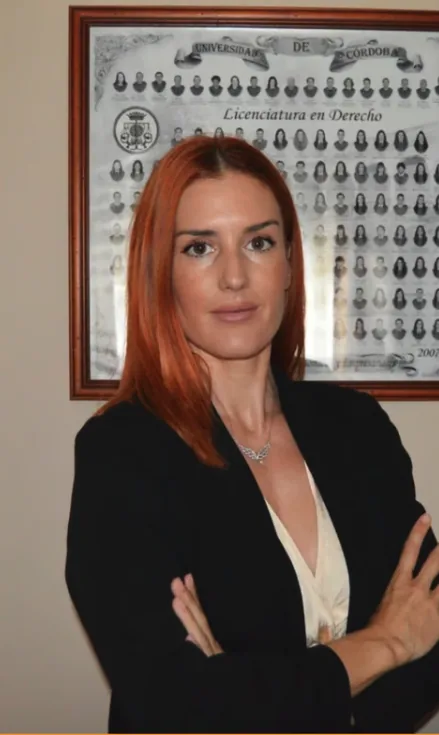
"The families who struggle are rarely the disorganised ones. They are the careful Americans who had a durable power of attorney back home and assumed that was the end of it. When a Spanish bank is asked to act on it during a health crisis, the questions start — the translation, the apostille, whether a particular power is really there. A short Spanish poder preventivo, signed calmly beforehand, is usually what avoids all of that."
— Lola Jurado · Immigration lawyer, Ilustre Colegio de Abogados de Málaga (nº 10907)
Incapacity is a separate question from succession
The first thing to separate cleanly is life from death. A will — US or Spanish — does nothing while you are alive. It is only read once you have died. Incapacity planning covers the gap that opens if, at some point, you can no longer manage your own affairs: a stroke, advancing dementia, a serious accident, a spell in intensive care. In that window your will is irrelevant, and the only documents that help are the ones that say, in advance, who may act for you and what they may do.
For a retiree this window is not a remote hypothetical; it is precisely the risk that grows with age, and it is one of the main reasons unhurried, well-organised couples plan ahead at all. The uncomfortable feature of incapacity is that once it arrives, it is usually too late to sign anything new — the very capacity you would need to grant a power of attorney is the thing you have lost. That is why every tool on this page shares one rule: it has to be signed while your capacity is clear and unquestioned. Incapacity planning is something you do when you feel well, for a version of yourself who may not be.
What Spain now offers: the poder preventivo
In 2021 Spain reformed this whole field. Ley 8/2021, which changed the Civil Code to support people in the exercise of their legal capacity, put voluntary measures chosen by the person first — ahead of anything a court might impose. The centrepiece for our purposes is the poder preventivo, a preventive or continuing power of attorney regulated in the reformed Civil Code (from Article 256). A different problem arises where the person is already an adult child with a disability and the family holds a US guardianship or conservatorship order; that cross-border signing question is covered in US guardianship and Spanish support measures.
It comes in two broad shapes, and the difference matters. In the first, you grant a normal power of attorney now but add a clause saying it will continue to have effect even if you later need support to exercise your capacity — so the person you trust can already act, and simply keeps that authority if your health declines. In the second, you grant a power that only begins to take effect if and when that point is reached, with the deed setting out how that is to be established. Either way, you decide in advance who acts for you rather than leaving it to a court.
Spanish law also lets you build in protections around the power. You can name the person or people who may act, set limits and instructions on what they can do, appoint someone to supervise them, and include safeguards designed to prevent abuse and to make sure your wishes, preferences and values are respected. A preventive power must be granted in a public deed before a Spanish notary, who then reports it to the Civil Registry so its existence is on record. Crucially, a properly made preventive power can keep working even if support measures are later considered — which is exactly the private, self-chosen outcome most people want instead of a court-run arrangement.
Does your US durable power of attorney work in Spain?
This is the question US retirees ask first, and the honest answer is: it can be used, but do not rely on it working smoothly on the day. A US durable power of attorney is designed to survive incapacity under US law, which is genuinely useful. But to be acted on in Spain it has to clear the same hurdles as any foreign document: it must be apostilled in the US state where it was signed, and translated into Spanish by a sworn translator recognised by the Spanish authorities, with the apostille page translated too. A Spanish notary may then need to incorporate the document formally into their records before a bank or registry will move on it.
Even once legalised, a deeper mismatch remains. Your US document was drafted in the language and structure of US law, listing powers the way a US bank expects to see them. A Spanish notary or bank official reading it has to satisfy themselves that a specific power they need — to operate an account, sign a particular deed, deal with a property — is clearly there, in a form they can accept. Foreign incapacity documents sit in an international framework designed to reduce these conflicts (the 2000 Hague Convention on the International Protection of Adults), but coverage is uneven and the practical burden still falls on you to prove the document does what you say. The result is friction and delay at the worst possible moment. For that reason many US retirees who actually live in Spain treat the US durable power of attorney as backup for the US side of their life, and sign a Spanish poder preventivo for the Spanish side — a local document, in the expected form, that a Spanish notary or bank has no reason to hesitate over. The same logic that makes a Spanish will faster than a US one applies here.
The medical side: advance directives
Money and medicine are handled by different documents in Spain, and it is worth keeping them apart in your head. The poder preventivo deals with legal and financial matters. Your wishes about medical treatment go in a separate document, the documento de instrucciones previas — also called voluntades anticipadas or, informally, testamento vital (a "living will"). It lets an adult with capacity set out in advance the care and treatment they do or do not want if they later cannot express it themselves, and it can also record values to help doctors interpret those wishes. Our dedicated guide to the advance healthcare directive (living will) in Spain explains why a US living will may not travel, how to register the Spanish version, and the Andalusian process step by step.
An advance directive in Spain can typically be formalised before a notary, before three qualified witnesses, or before a designated health-service official, depending on the region. To be useful in an emergency it should be entered in the register of advance directives — each autonomous community runs its own, feeding a national register — so that a hospital anywhere in Spain can find it when it counts. Because healthcare is run at the regional level, the exact procedure, forms and registry differ between, say, Andalucía, the Comunitat Valenciana and Madrid, which is one more reason to set this up locally rather than assume a US healthcare proxy will be pulled up by a Spanish hospital. Sit the directive alongside your health-card and residency registration, and it becomes part of the same settle-in phase.
How the Spanish documents actually get made
The mechanics are less daunting than they sound. A poder preventivo is signed as a public deed before a Spanish notary. You do not need fluent Spanish — the deed is prepared and the notary confirms you understand it, and in practice a bilingual format or an interpreter is used where needed — but you do need clear capacity on the day, which is exactly why it is done early. You decide who your attorney is, what powers they hold, and what safeguards apply; the notary formalises it and notifies the Civil Registry. The advance healthcare directive is a parallel, separate step: prepared in the form your region accepts and lodged in the advance-directive registry.
The sensible sequence is to fold both into the wider arrival checklist rather than treating them as a distant "someday" task. Once you have your NIE and TIE, a Spanish bank account and a Spanish will, the incapacity documents are a natural final piece — and they are inexpensive relative to what an unplanned incapacity costs a family in delay and stress. See our first 90 days checklist for how these pieces fit together. It is also worth noting that these documents are not "set and forget": if you move region, change who you trust, or your circumstances shift, they should be reviewed, because a directive registered in one community and a power naming someone you have since fallen out with are worse than useless.
US tools vs Spanish tools, side by side
The cleanest way to see the plan is to line up each US instrument against its Spanish counterpart, because the goal is not to throw away the US documents but to make sure there is a local equivalent that works where you now live.
| What you want to cover | US document | Spanish counterpart | Why the Spanish one helps |
|---|---|---|---|
| Someone manages money and legal matters if you cannot | Durable power of attorney | Poder preventivo (Civil Code, post-Ley 8/2021) | Local deed a Spanish notary and bank accept without apostille, translation and interpretation of a foreign document |
| Medical treatment wishes if you cannot speak for yourself | Healthcare proxy / living will / advance directive | Documento de instrucciones previas (voluntades anticipadas) | Registered where Spanish hospitals can find it; matches the regional healthcare system |
| Choosing in advance who supports you, on your terms | Durable POA + guardianship nomination | Preventive power with your own safeguards and supervisor | Keeps the choice private and self-directed instead of court-appointed |
| What happens after death | US will / trust | Spanish will (see separate guide) | Different question entirely — a will does nothing during incapacity |
Read across each row and the pattern is the same one that runs through cross-border planning generally: keep the US documents for the US institutions that expect them, and add a Spanish document for the Spanish institutions that will actually be asked to act. For the money-and-property side this connects to the transactional work an attorney can already do for you under a poder notarial granted from the USA; the poder preventivo is the incapacity-proof cousin of that everyday power.
The last row of that table carries more weight than it looks. Every power of attorney — Spanish or American, preventive or ordinary — ends at death. The document that does excellent work right up to the final moment stops working precisely when a family needs someone able to instruct a funeral home and sign for a transfer. Authority after that point comes from the will and the succession, not from the poder. That handover, and the 48-hour window in which it matters, is set out in what happens when a US retiree dies in Spain.
Common mistakes we correct
The first is assuming a US durable power of attorney simply works in Spain. It can be used, but only after apostille, sworn translation and a Spanish notary's interpretation — slow and uncertain in a crisis. The second is treating incapacity and succession as one project: a beautifully drafted will does nothing while you are alive and cannot sign, and people who focus only on "who inherits" leave the harder, earlier gap wide open. The third is confusing money with medicine — expecting a financial power of attorney to authorise medical decisions, when Spain handles treatment wishes through a separate advance directive that lives in its own registry.
The fourth is timing: waiting until there is a diagnosis or a scare to put the documents in place, by which point capacity may already be in doubt and the private, notary-based route may be gone, leaving the family to ask a court to step in. The fifth is registering nothing and telling no one — a perfect Spanish directive helps nobody if it is not lodged in the register a hospital checks, and a poder preventivo helps nobody if the person you named cannot find it. The through-line, as always in a cross-border life, is that the expensive problems are structural and are cheapest to fix while you are well, organised and able to sign.
A power of attorney that covers the bank and the notary but not the household leaves a gap. If a carer is employed at home, someone must be able to run that payroll, and eventually to end it: see what the household employer relationship actually involves.
Frequently asked questions
Is my US durable power of attorney valid in Spain?
It can be used, but not automatically. It must be apostilled in the US state where it was signed and translated by a sworn translator, and a Spanish notary, bank or registry then has to interpret a document written for US law. Because the powers may not map cleanly onto Spanish practice, many US retirees living in Spain also sign a Spanish poder preventivo, so a local document exists in the form Spanish institutions expect.
What is a Spanish poder preventivo?
It is a preventive or continuing power of attorney regulated in the Civil Code after the reform introduced by Ley 8/2021. You can grant a power that continues to have effect if you later need support to exercise your capacity, or one that only begins to take effect at that point. It must be signed as a public deed before a Spanish notary, who reports it to the Civil Registry.
Does a power of attorney cover medical decisions in Spain?
Usually not. Treatment wishes go in a separate advance healthcare directive, the documento de instrucciones previas (also called voluntades anticipadas or testamento vital), which records the care you do or do not want if you cannot express it and is lodged in a regional and national registry so doctors can find it. The poder preventivo deals with legal and financial matters instead.
When should a US retiree put these documents in place?
Early, while your capacity is clearly intact — ideally in the settle-in phase after arrival, alongside the padrón, the TIE, banking and your Spanish will. The documents can only be signed before incapacity, so leaving them until there is a health problem defeats the purpose and can push the family into a court process instead.
What happens if I do nothing and later lose capacity in Spain?
If no valid preventive power is in place, the family may have to ask a Spanish court to put support measures in place — slower, public and outside your control. A poder preventivo and an advance directive let you choose in advance who acts for you and how, so that documents you signed govern the situation rather than a court-appointed arrangement.
Sources reviewed July 2026: Ley 8/2021, de 2 de junio, reforming Spanish civil and procedural law to support people in the exercise of their legal capacity, and the resulting Civil Code provisions on preventive powers of attorney (poderes preventivos, from Article 256) and their recording in the Civil Registry; Spanish regional and national frameworks on advance healthcare directives (instrucciones previas / voluntades anticipadas) and the Registro Nacional de Instrucciones Previas; the 2000 Hague Convention on the International Protection of Adults; and Spanish and US notarial guidance on apostille, sworn translation and use of foreign powers of attorney in Spain. General information only, not legal or medical advice. The form, powers, safeguards and registration of any power of attorney or advance directive should be confirmed with qualified Spanish and US advisers before acting.