
This is the page nobody wants to read before booking a consultation about a non-lucrative visa. It is also, in our experience, the one subject where American families arriving in Spain are asked to make a permanent decision faster than on any other day of the move.
The reason is structural rather than cultural. Spain regulates what happens to a body under public-health law, and that law works in hours. The United States regulates what counts as proof of death for banks, insurers and probate, and that system works in months. Neither country is being unreasonable. They are simply answering different questions, and no one is responsible for warning the retiree that the two answers will collide.
What follows is the practical shape of that collision, with the rules that produce it. It is not a morbid exercise. It is the same planning logic as long-term care, the incapacity power of attorney, the advance healthcare directive that speaks for you before that point, the separate organ-donation wishes that may be checked at death, and the distinct question of euthanasia and assisted dying in Spain: foreseeable events that cost very little to prepare for and a great deal to improvise.
On this page
Two clocks that do not match The Spanish window: 24 to 48 hours What the United States will admit The three routes, honestly compared The document gap: Spanish certificate vs DS-2060 The insurance nobody told you to buy Who is allowed to sign What to put in place now Frequently asked questions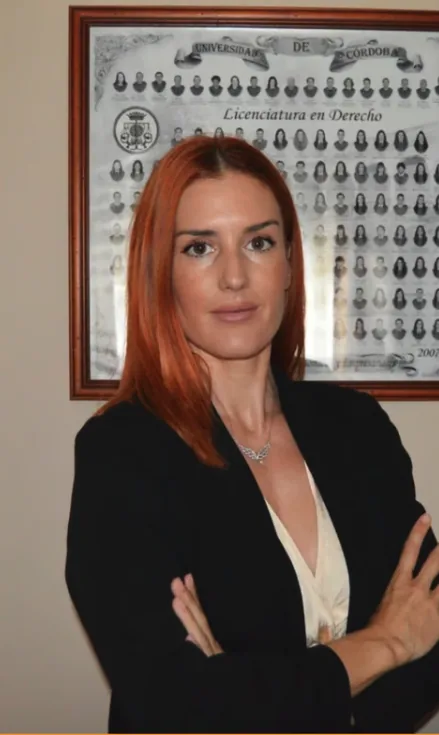
"Families do not call us the week before. They call on the second day, from a funeral home, being asked to decide something irreversible in a language they do not speak. Everything on this page is cheap to arrange in advance and expensive to arrange in a hurry."
— Lola Jurado · Immigration lawyer, Ilustre Colegio de Abogados de Málaga (nº 10907)
Two clocks that do not match
Start with the two rules side by side, because the whole problem is visible in the arithmetic.
On the Spanish side, the mortuary regulation that applies in Málaga province is the Andalusian one, approved by Decreto 95/2001. Its article 21 says that a body may not be buried or cremated before 24 hours have passed from death, nor after 48 hours, unless it has been refrigerated, frozen, embalmed or temporarily conserved. The state regulation behind it, Decreto 2263/1974, uses the same architecture.
On the American side, the Department of State says the Consular Report of Death of a US Citizen Abroad "can take as long as four to six months, depending on the country of death". That report, form DS-2060, is the document your bank, your life insurer and a US probate court will actually want.
So the family is asked to make the irreversible choice — bury here, cremate here, or fly the body home — inside roughly two days, and will not hold the document that proves the death to American institutions for months afterwards. The decision comes first. The proof comes last. That is the wrong order, and nothing in either legal system fixes it for you.
The Spanish window: 24 to 48 hours
The 48-hour figure is not a funeral director's preference. It is public-health law, and it interlocks with a second deadline that most families never hear about.
Under article 7 of the same Andalusian regulation, embalming and temporary conservation may only be carried out after 24 hours from death and, in the ordinary case, not after 48 hours. Embalming is compulsory, among other cases, where the body cannot be buried or cremated within 72 hours, or where the rules of the chosen transport require it (article 8). Refrigeration is what buys the family real time: article 12 allows immediate transfer to a funeral home or tanatorio once the medical death certificate is issued, and a refrigerated body can be held while decisions are made.
Read those together and the shape emerges. The window in which a body can be prepared for a transatlantic flight is a roughly 24-hour slot that opens at hour 24 and, absent refrigeration, closes at hour 48 — the very same window in which the family is deciding whether they want a transatlantic flight at all. If refrigeration is not requested early, or if nobody with authority is reachable, the practical menu shrinks to what can be done locally.
There is a further sequencing trap for anyone who wants the body flown to the United States. Article 38 of the state regulation says the family must first obtain, through the consulate of the destination country accredited in Spain, the authorisation permitting the body to enter that country — and only then apply to the provincial health authority for permission to take it out of Spain. In Andalucía, article 14 of Decreto 95/2001 puts that exit authorisation with the Delegado Provincial of the health department. Two governments, in a fixed order, over a weekend, in a country where the family may have no lawyer, no notary and no Spanish.
What the United States will admit
Assume the family wants the body home. What will actually be accepted at the American end is narrow and specific.
Under 42 CFR 71.55, human remains may be cleared for entry into the United States only if one of three conditions is met: the remains are cremated; or they are properly embalmed and placed in a hermetically sealed casket; or they are accompanied by a permit issued by the CDC Director. The US Embassy in Madrid publishes exactly this rule on its own death-of-a-US-citizen page, and the CDC permit route exists mainly for deaths from a quarantinable communicable disease.
Alongside that, the State Department lists four documents that generally travel with the remains: a consular mortuary certificate prepared by a consular officer; the local death certificate; an affidavit from the local funeral director confirming that the casket contains only the remains, clothing and packing materials; and a transit permit from the local health authority at the point of embarkation.
Notice what this does to the Spanish 48-hour clock. The American rule effectively requires either cremation or embalming plus a sealed casket. The Andalusian rule says embalming can only happen between hours 24 and 48. So the option that most American families instinctively assume is the default — fly the body home intact — is the option with the tightest legal timing, the highest cost, the most agencies involved, and the least tolerance for a family that is still deciding.
The three routes, honestly compared
There are three real options, and they are not equally weighted. We are not recommending one; families have entirely legitimate reasons — religious, personal, familial — to choose any of them. But the differences are worth seeing before the fact rather than during.
| Repatriate the body | Cremate in Spain, ashes travel | Burial or interment in Spain | |
|---|---|---|---|
| US import rule | Embalming + hermetically sealed casket required (42 CFR 71.55) | Cremated remains expressly admitted | Not applicable |
| Spanish timing pressure | Highest: embalming window is hours 24–48 | Moderate: cremation after hour 24, refrigeration can extend | Moderate: same 24–48 rule, local |
| Agencies involved | US consulate, Andalusian health delegation, funeral home, airline, customs | Funeral home, municipal authorisation, crematorium | Funeral home, municipal authorisation, cemetery |
| Transport of the remains | Regulated coffin, transit permit, mortuary certificate, affidavit | Article 22 Decreto 95/2001: transport of ashes is subject to no health requirement at all | None |
| Typical elapsed time | Days to weeks | Days | Days |
| Reversible? | No | No | Exhumation is possible but separately regulated and slow |
| Cost profile | By far the highest; no US government funds are available | Lowest | Low to moderate; ongoing niche or plot costs |
The middle column deserves a sentence of its own, because it is the one fact in this whole area that is genuinely asymmetric. Article 22 of the Andalusian regulation says, flatly, that the transport or deposit of the ashes resulting from a cremation "is not subject to any health requirement". And 42 CFR 71.55 lists cremated remains as the first category the United States admits. Cremation is the only route where both legal systems simultaneously step out of the way. That is why it collapses a multi-agency, multi-week logistics chain into something a family member can carry.
None of which makes it the right choice. For many families it is precisely the wrong one, and it forecloses the American funeral with the body present that they wanted. The point is only this: it is the choice with the fewest legal obstacles, which means it is the choice a family drifts into when they run out of hours. Drifting into an irreversible decision is a bad way to make it.
On cost, we deliberately do not publish figures. The US Embassy in Madrid maintains a "Disposition of Remains" report for Spain describing local requirements and costs for interment, cremation, embalming and shipment of remains. That is the source to read, and it is updated. What the embassy is unambiguous about is the other half: "there are no U.S. government funds available to cover any of the expenses involved."
The document gap: Spanish certificate vs DS-2060
Now the slow clock. Within days, Spain will produce a death entry in the Registro Civil and a Spanish death certificate. In Spain, that document works. It opens the succession, it satisfies the notary, it is what the Spanish inheritance process is built around.
In the United States it frequently does not work. The State Department's own guidance is blunt about why: a foreign death certificate is "issued by the local (foreign) competent authority", is "written in the local language and prepared according to local laws", and is "in many instances, not accepted in the United States for insurance and estate purposes".
The document American institutions expect is the Consular Report of Death of a US Citizen Abroad — form DS-2060, now usually called the CRODA. US Mission Spain has issued it electronically since 12 June 2023, with the consular officer's digital signature and the mission's digital seal, which genuinely speeds up delivery. But electronic issuance does not change the sequence, and the sequence is the problem: the consulate "cannot typically issue a CRODA without a foreign death certificate or a finding of death by a competent local authority". Spain first. Washington second. Four to six months, on State's own estimate.
So there is a period — potentially most of a year — in which the retiree is fully, legally dead in Spain and not yet conveniently provable as dead in the United States. Spanish succession can move. The US brokerage account, the life insurer and the probate court may not. A surviving spouse can find the Spanish side progressing while the American income sits frozen behind a document that has not been signed yet.
Two mitigations are worth knowing. Where there is no will and the estate is small, State's Form DS-5511 affidavit for the surviving spouse or next of kin may be enough to release the estate. And where no legal representative is present in Spain, a consular officer may act as provisional conservator — taking possession of and inventorying small valuable items, sometimes paying local debts out of estate funds. Neither is a plan. Both are what happens when there was no plan.
The insurance nobody told you to buy
Here is the part with a bitter edge, and it runs straight through advice this firm gives and stands behind.
We tell every non-lucrative applicant that a travel or expat policy built around emergency evacuation and repatriation is the wrong product for the visa, and that is correct: consulates want full private cover, authorised in Spain, without a repatriation-only limitation. Our policy checklist and health insurance page both say so. Applicants therefore buy a proper Spanish health policy. Good.
And a health policy, by definition, pays for medical care and stops at death. It is not designed to bury anyone. So the retiree ends up with the best health cover of their life and no cover at all for the one event that health insurance cannot, conceptually, cover. The advice was right. The gap it leaves is real.
Spain's answer is a separate insurance line that has almost no American equivalent: the seguro de decesos. It pays for the funeral services and the burial itself, and policies commonly include repatriation. It is not a niche product — according to UNESPA, the Spanish insurance association, around 22 million people in Spain are covered by one, roughly 45% of the population. Nearly half of this country has quietly pre-solved the exact problem that blindsides American families, and Americans almost never buy it, because in the US market the product barely exists and the instinct is to treat funerals as something you pay for when they happen. Whether a retiree should actually buy one, what it costs, and why the age window closes on arrival is its own decision: see should a US retiree buy a seguro de decesos.
We are not insurance intermediaries and we do not sell or recommend policies. What we can do is make sure the question gets asked while there is a calm afternoon to ask it in — alongside the Medicare decision and the convenio especial, which are the two other healthcare questions that never get asked at the right time either.
Who is allowed to sign
The last trap is about authority, and it catches careful people.
A power of attorney ends at death. This is true of a Spanish poder and true of an American one. If a retiree has done the sensible thing and put a Spanish power of attorney for incapacity in place, that document does excellent work right up to the final moment and then, precisely when the family needs someone able to instruct a funeral home and sign for a transfer, it expires. The authority that survives comes from the will and the succession, not from the poder.
Which is why the pairing matters. A Spanish will covering Spanish assets, alongside the incapacity power of attorney, is not belt-and-braces. They are two documents doing two different jobs at two different moments, and having only one of them leaves a gap on exactly the day the gap hurts. Families holding a US living trust often assume it covers the Spanish end; that assumption deserves its own conversation, not a guess.
The tax layer sits behind all of it and does not wait either — Spanish inheritance tax runs to its own deadlines, and for American families there is a separate collision between US estate tax and Spanish inheritance tax, plus a specific problem where the surviving spouse is not a US citizen. None of that is what a family should be discovering on day two.
There is also a second administrative wave for the spouse who remains in Spain: their own TIE, padrón, bank account, health cover and direct debits still have to keep working while the estate file is being opened. We cover that continuity problem separately in the surviving spouse guide.
What to put in place now
This is the short list. It is genuinely short, and none of it is expensive relative to what it prevents.
- Write down the choice. Repatriation, cremation, or burial in Spain — decided by the person, in writing, in advance. Not so it binds anyone legally, but so that at hour 30 the family is executing a decision instead of making one.
- Ask about seguro de decesos. One conversation with a Spanish broker. Check specifically whether repatriation is included and what the waiting periods are.
- Pair the will and the power of attorney. The poder covers incapacity; the will covers what comes after. Neither substitutes for the other.
- Keep the consular numbers where the family can find them. US Embassy Madrid, +34 91 587 2200; from the US and Canada, +1-888-407-4747; from abroad, +1-202-501-4444.
- Tell somebody in Spain. The person who will be physically present matters more than the person named in a US document. A neighbour who knows there is a plan is worth more at hour 12 than a perfect file in a drawer in Ohio.
- Read the embassy's Disposition of Remains report for Spain once. Not because it is pleasant, but because reading it costs an hour now and nothing later.
Our part in this is narrow and we would rather state it plainly than oversell it. We do not run funerals, we do not sell insurance and we are not going to pretend that paperwork makes a death easier. What a lawyer can do is make sure the documents that create authority exist before they are needed, that the Spanish and American sides of an estate are not planned in separate rooms, and that a family arriving in Málaga on the worst day of their lives is not also discovering, for the first time, that a decision was due yesterday.
Frequently asked questions
How quickly must a burial or cremation happen in Spain?
Under the Andalusian mortuary regulation approved by Decreto 95/2001, a body may not be buried or cremated before 24 hours have passed from death, nor after 48 hours, unless it is refrigerated, frozen, embalmed or temporarily conserved. In practice the funeral home applies refrigeration or conservation to hold the position open, but the family is still asked to choose within roughly two days.
Will my Spanish health insurance pay to send my body home?
Almost certainly not. A health policy pays for medical care and ends at death. The Spanish product that pays for the funeral, and often for repatriation, is a separate line called seguro de decesos. According to UNESPA figures, around 22 million people in Spain carry one. Very few Americans buy it, because the product barely exists in the US market.
What does the United States require before remains can be flown in?
Under 42 CFR 71.55, human remains may be admitted to the United States only if they are cremated, or properly embalmed and placed in a hermetically sealed casket, or accompanied by a permit issued by the CDC Director. Cremated remains are the simplest case. An unembalmed body in an ordinary coffin is not an option for a flight to the US.
Is the Spanish death certificate enough to settle US accounts?
Often not. The State Department notes that a foreign death certificate is written in the local language under local law and in many instances is not accepted in the United States for insurance and estate purposes. The document US institutions expect is the Consular Report of Death of a US Citizen Abroad, form DS-2060, and the consulate cannot normally issue it until the Spanish certificate exists first.
How long does the Consular Report of Death take?
The State Department says the process can take as long as four to six months depending on the country of death. US Mission Spain has issued the report electronically since June 2023, which speeds up delivery once it is signed, but it does not remove the underlying sequence: Spanish registration first, consular report second.
Does my power of attorney let my spouse handle everything?
No. A power of attorney, Spanish or American, ends at death. The authority that survives comes from the will and the succession process, not from the poder. This is exactly why the incapacity power of attorney and the Spanish will are two different documents doing two different jobs, and why having only one of them leaves a gap.
Sources reviewed July 2026: BOE, Decreto 2263/1974 approving the Reglamento de Policía Sanitaria Mortuoria (arts. 8, 9, 15, 21, 22, 34–40); BOJA, Decreto 95/2001 approving the Reglamento de Policía Sanitaria Mortuoria de Andalucía (arts. 7, 8, 9, 11–15, 21, 22); US Department of State, Death of a US citizen abroad and Consular Report of Death guidance, forms DS-2060 and DS-5511; US Embassy Madrid, Death of a U.S. Citizen and Disposition of Remains Report for Spain; 42 CFR 71.55 and CDC guidance on importation of human remains; Ley 20/2011 del Registro Civil; UNESPA figures on the Spanish seguro de decesos. General information only, not legal, tax, insurance or funeral advice. Rules differ by autonomous community and change over time; confirm current requirements with the competent authorities and your own advisers before relying on them.