
A large share of the questions we get about proving means for the non-lucrative visa come from people who are not living on a neat monthly income at all. They are sitting on capital that arrived in a lump: an inheritance from a parent, a generous gift from family to help them make the move, the payout on a life-insurance policy, the net proceeds of selling a home. The instinct is to worry that this money is somehow the wrong kind of money — that the consulate wants a salary or a pension and will not accept a windfall. That instinct is misplaced. The means requirement is about having enough lawful resources to live in Spain without working, and money you were given or inherited is genuine wealth. The catch is not whether a gift or inheritance counts, but the two conditions that always travel with a large sudden sum.
This page isolates those conditions, because our neighbouring pages circle them without landing on this exact case. The guide to using savings instead of income covers accumulated capital in general; the page on whose name the money must be in covers attribution and joint accounts; and the pages on Spanish gift tax and inheritance tax cover what you might owe. This page assumes the money reached you outright; if your inheritance is instead held in trust and a trustee controls the distributions, that is a different question covered in using trust distributions as means when you are a beneficiary. What none of them isolates is the specific means-test question of a windfall: money that arrived as a one-off gift or inheritance, its provenance, and whether a lump that landed recently reads as stable means. As always, this is general orientation and not legal, tax or immigration advice; confirm your own facts and consulate before you act.
On this page
The short answer: yes, if it is yours and you can trace it Enough is easy; "stable" is the real test for a lump sum Source of funds: proving a gift or inheritance is legitimate A completed gift vs a promise to support you Money you have not received yet: expected inheritances Timing and seasoning: the windfall that landed last week How to present it: a lump sum, or turned into income A note on tax — separate from the means test At a glance Frequently asked questions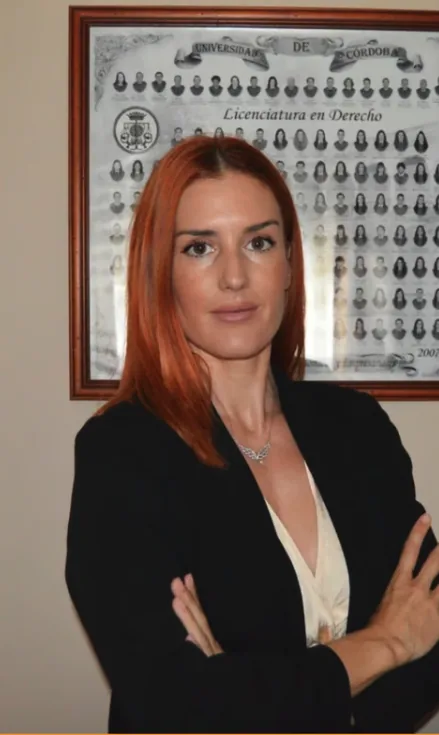
"A gift or an inheritance is not a weaker way to qualify — it is often a very strong one, because it can be a large, clean amount. What I coach clients on is the paperwork behind it. A consulate officer, and later a Spanish bank, will see a big deposit and ask, quite reasonably, where it came from. If you can hand them the will and the distribution letter, or the gift deed, the money goes from looking suspicious to looking obviously lawful. The whole game with a windfall is provenance and ownership: prove it is yours and prove where it came from, and the amount takes care of itself."
— Lola Jurado · Registered lawyer, Ilustre Colegio de Abogados de Málaga (nº 10907)
The short answer: yes, if it is yours and you can trace it
The non-lucrative visa asks you to demonstrate sufficient and stable means to support yourself, and any dependants, without carrying out work in Spain. It does not stipulate that those means be earned income. Accumulated capital qualifies, and a gift or inheritance is simply capital that reached you by gift or succession rather than by saving a salary over the years. So the one-line answer is straightforward: yes, a gift or inheritance can prove your means, provided it is now genuinely your money and you can show where it came from.
Those two provisos are the whole of the matter, and they are worth stating plainly before the detail. First, ownership: the money has to have actually become yours — a completed gift transferred to your accounts, or an inheritance that has been distributed to you — rather than a sum someone intends to give you or an estate still winding its way through probate. Second, provenance: because it arrived suddenly and in size, you must be ready to document its lawful origin, in a way a salaried applicant showing routine payslips never has to. Meet those two, add the money to any other income and assets you hold, and clear the required threshold with a comfortable margin, and a windfall is a perfectly good foundation for the file.
Enough is easy; "stable" is the real test for a lump sum
The means requirement has two halves that a windfall satisfies very unevenly. On the sufficient half — is there enough money? — a gift or inheritance usually shines, because it often arrives as a single sum that dwarfs a year of the IPREM-based minimum. Where a pensioner has to show a modest amount month after month, an heir may show a balance many times the annual floor in one line. So on quantity, a large windfall is not a weak case; it is frequently a strong one.
The tension lives on the other half — stable. A monthly pension is the archetype of stable means: it recurs, predictably, for life. A lump sum is the opposite shape — a big number that does not, by itself, repeat. This is the same issue that runs through the page on using savings instead of income, and the resolution is the same: a large enough balance can satisfy the requirement on its own by demonstrably covering the required period, but consulates are most comfortable when there is either a very healthy cushion or the capital is producing, or has been arranged to produce, some recurring return. The practical implication for a windfall is that its size and durability carry the case, and pairing it with any recurring income you do have — or turning part of it into income, which we come to below — makes it read as stable rather than as a balance that might simply be spent down.
Source of funds: proving a gift or inheritance is legitimate
This is the part unique to a windfall, and the part most applicants underestimate. A large, recent, unexplained deposit is precisely the thing that draws scrutiny — from the consulate weighing your file, and separately from the Spanish bank where you will need to open an account, which applies its own anti-money-laundering source-of-funds checks. A gift or inheritance is a lawful origin, but "lawful" only helps if you can show it. The job is to convert an anonymous lump into a documented one.
What that looks like depends on how the money reached you. For a gift, the supporting evidence is typically a gift deed or a signed letter from the donor confirming the amount, the date and that it is an outright gift, together with the transfer records tracing it from the donor's account to yours. For an inheritance, it is the death certificate, the will, the grant of probate or its equivalent, and — most usefully — the executor's or estate's distribution statement showing your share and its payment to you. A life-insurance payout is evidenced by the insurer's settlement letter; the net proceeds of a property sale by the completion or closing statement. In every case the aim is a clean paper trail from origin to your account, and if any of these documents is a foreign public document you should expect to have it apostilled and officially translated like the rest of your file. Provenance is what turns a red-flag deposit into obvious, usable means.
A completed gift vs a promise to support you
There is a distinction here that decides whether the money is your means at all, and it catches people out because both versions feel like "my family is helping me." A completed gift is money that has irrevocably changed hands: a relative has given it to you, it has been transferred into your own accounts, and it is now your capital to do with as you please. That is unambiguously your means. An ongoing promise — "my parents will send me money each month to live on" — is something else entirely. That is not your capital; it is third-party support, and Spanish practice assesses it under the separate framework for a sponsor or guarantor, where the officer looks at the supporter's own means and the seriousness of their commitment to maintain you, not at your accounts.
The trap is trying to make the second look like the first. A transfer that a relative makes into your account shortly before you file, purely to inflate the balance, with the shared understanding that it is really their money supporting you, can read to a careful officer as exactly what it is — sponsorship wearing the costume of personal savings. That connects directly to the point on the whose-name-must-the-money-be-in page: the file must reflect the reality of whose money it is and how it will actually support you. If a relative is genuinely giving you a lump sum, take it as a real gift, document it as one, and let it become your means. If the truth is that a relative will keep funding your life in Spain, present that honestly as sponsorship, where it is a legitimate route in its own right — rather than staging a one-off transfer that invites the question it is meant to avoid.
Money you have not received yet: expected inheritances
A common and understandable mistake is to count an inheritance that is coming but has not arrived. Someone whose parent has recently died, with a substantial estate working its way through probate, naturally thinks of that money as theirs already. For the means test, it is not. The requirement looks at the resources you currently hold and can prove, not at resources you expect to hold. An estate still in administration is not money in your hands: you cannot yet demonstrate ownership of a specific sum, and both the final amount and the timing of any distribution remain unsettled until the executor completes the process.
The practical consequence is simply one of sequence. Until the estate is administered and your share has actually been paid to you and documented, it cannot form part of the means you present. Once it has — once there is a distribution statement and the money sits in your account — it counts like any other capital you own, with the provenance already neatly evidenced by the estate paperwork. If your plan depends on an inheritance that is close but not complete, the sensible course is usually to wait until it has landed, or to build the file on means you already hold and treat the inheritance as reinforcement once it arrives, rather than asking a consulate to accept a promise the probate court has not yet kept.
Timing and seasoning: the windfall that landed last week
Even a genuine, well-documented gift or inheritance can look weaker if it appears in your accounts days before you file. Consulates are alert to balances that spike suddenly just in time for an application, because that is the signature of a borrowed or temporary top-up rather than settled wealth. This is the idea of seasoning: money that has sat in your account for several months, visible across a run of statements, reads as yours and stable; money that materialised last Tuesday reads as a question mark, however legitimate it turns out to be.
A windfall does not escape this, but it has a good answer to it — the provenance documents. A recent large deposit that you can immediately tie to a dated gift deed or an estate distribution statement is far more persuasive than a recent large deposit with no explanation, because the paperwork shows the money is real, lawful and now permanently yours rather than a temporary loan. Where you have the luxury of timing, the strongest posture is both: receive the gift or inheritance, let it sit and season across your statement history, and keep the origin documents to hand. Where you do not — where the money has only just arrived — lean hard on provenance, and be ready to explain the deposit rather than hoping it passes unnoticed. The same instinct that helps here helps at renewal, when the durability of your means is looked at again.
How to present it: a lump sum, or turned into income
There are two honest ways to bring a windfall to the file, and the best choice depends on its size and on what else you hold. The first is to present it as capital — savings and assets — with the provenance documents attached, relying on the balance to cover the required period with a healthy margin. This is the natural route when the sum is large relative to the threshold and you simply need to show you can live on your wealth without working. It is the same logic as the savings route, with the added provenance layer that a windfall requires. A common form of inherited windfall is an account or insurance contract paid out at death — for example a non-spouse inherited TSP, which the plan forces out as a payout, a non-spouse inherited HSA, which stops being an HSA and leaves a taxable net lump sum, or an inherited nonqualified annuity, where the insurer's death-benefit election decides whether you hold savings or a payment stream. Each reads as capital or income only after the money or payment right has landed and is documented.
The second is to turn part of it into recurring income. Because a lump sum tests the "stable" half of the requirement, converting some of the windfall into a stream — a dividend-paying portfolio, interest-bearing deposits, or a purchased annuity that pays a guaranteed amount for life — reframes it from "a balance that could be spent down" to "means that recur," which is exactly the shape consulates find most reassuring. A charitable gift annuity can also create a stream, but it permanently gives the principal to a charity, so it should be a philanthropic choice first rather than a visa shortcut. Many of the strongest windfall files do both: they show the underlying capital and the income it now produces. Which mix is right for you is a genuine planning question, and one worth thinking through before you file rather than after, because it also interacts with how the money is taxed once you are resident. If you are unsure whether to present your gift or inheritance as capital, as income, or as a combination, that is a short conversation that can materially strengthen the file — and it is the kind of thing we help applicants map out. Getting it wrong is one of the avoidable reasons a non-lucrative application is refused.
A note on tax — separate from the means test
One worry deserves its own paragraph precisely so it does not get tangled with the means question: will I be taxed on this gift or inheritance? The answer may be yes, but it has nothing to do with whether the money proves your means. Spain taxes gifts and inheritances received by residents, with the rate and any reliefs depending on the autonomous region and on your relationship to the donor or the deceased, and with real subtleties around residency and timing when money is received around the moment you move. The consular officer assessing your file is not applying that tax; they are only checking that you hold enough lawful, documented resources to live without working.
That said, the tax angle is worth understanding before you move, because it can influence when and how you take a windfall — sometimes it is better received before establishing Spanish tax residence, sometimes the difference is negligible, and it varies by region and relationship. We keep that analysis on its own pages so this one stays focused: see Spanish gift tax for lifetime gifts and inheritance and gift tax in Spain for expats for how the charge works and where the planning opportunities sit. For the visa itself, keep the two questions apart: means is about having and proving the money; tax is about what, if anything, you owe once you are resident.
At a glance
The table maps common windfall situations to how they tend to read against the means test, and what to do.
| Windfall situation | How it tends to read | What to do |
|---|---|---|
| Completed gift, transferred to your accounts, documented | Your means — usable | Show gift deed/letter + transfer trail; season it if you can |
| Distributed inheritance already in your account | Your means — usable | Attach will, probate and distribution statement |
| Relative's ongoing promise to fund your life | Not your means — sponsorship | Present honestly as a sponsor/guarantor, not as savings |
| Inheritance still in probate / not yet distributed | Cannot be counted yet | Wait until paid and documented, or build on means you hold |
| Large gift that landed days before filing | Season/timing risk | Lean on provenance docs; explain the deposit clearly |
| Life-insurance payout or home-sale proceeds | Your means — usable | Show settlement/completion statement as source of funds |
| Windfall converted into an annuity or dividend portfolio | Strong — reads as stable | Show both the capital and the recurring income it produces |
The through-line is that a gift or inheritance is judged by the same two questions every time: is it genuinely yours, and can you prove where it came from? Answer both, add a sensible margin over the threshold, and give a lump sum the shape of stability — either through size or through income — and a windfall is not a shaky basis for the non-lucrative visa but often an unusually solid one. The mistakes are the avoidable ones: counting money you do not yet hold, dressing up ongoing support as savings, or presenting a large deposit with no story behind it.
Frequently asked questions
Can I use a gift or inheritance to meet the non-lucrative visa means requirement?
Yes, in principle. The non-lucrative visa asks you to show sufficient means to support yourself without working, and it does not require that every euro be earned income — accumulated wealth counts, and a gift or inheritance is simply how some of that wealth arrived. What matters is not the fact that the money was given or inherited but three things about it: that it is now genuinely yours (a completed gift or a distributed inheritance, not a promise), that you can document where it came from, and that the total, combined with any other income, comfortably clears the threshold with a sensible margin. A large, well-documented windfall that has settled into your own accounts is perfectly usable as means.
Do I have to prove where a large gift or inheritance came from?
Effectively yes. A large deposit that appears in your account without explanation is exactly what raises questions — both at the consulate reviewing your file and at the Spanish bank where you may open an account. A gift or inheritance is a legitimate source, but you need to be able to show it: a gift deed or letter from the donor for a gift; a copy of the will, grant of probate and the executor's or estate's distribution statement for an inheritance; a settlement letter for an insurance payout; a completion statement for a property sale. Provenance documents turn an unexplained lump sum into a clearly lawful one, and that is what makes it usable as proof of means rather than a red flag.
My parents will give me money to live on in Spain — does that count as my means?
It depends entirely on whether the money is already yours or is an ongoing promise. A completed, irrevocable gift that has been transferred into your own accounts is your capital and can be used as your means. An informal arrangement where your parents will keep sending you money is not your means at all — it is third-party support, and it is assessed under the separate rules for a sponsor or guarantor, where the consulate looks at the supporter's own capacity and their legal commitment to you. If the plan is genuinely that a relative will fund your life in Spain on a continuing basis, that should be presented honestly as sponsorship rather than dressed up as your own income, because a one-off transfer made just to pad the file can read as exactly that.
Can I count an inheritance I am expecting but have not received yet?
No. The means test looks at resources you currently hold, not resources you expect to hold. An inheritance that is still tied up in probate, or an estate that has not yet been distributed, is not money in your hands — you cannot yet prove ownership of it, and its final amount and timing are not settled. Until the estate is administered and your share has actually been paid to you, it cannot form part of your means. Once it has been distributed and is documented, it counts like any other capital you own.
Does receiving a gift or inheritance mean I will pay Spanish tax on it?
Possibly, but that is a separate question from the means test and does not affect whether the money can prove your means. Spain levies gift and inheritance tax on residents, with rules that vary by region and by your relationship to the donor or deceased, and there are timing and residency subtleties for money received around the time you move. The visa officer assessing your means is not applying that tax; they are checking that you have enough lawful, documented resources to live without working. It is still worth understanding the tax exposure before you move, because it can influence when and how you take a gift or inheritance, but it is a planning matter handled on its own, not part of proving your means.
Sources reviewed July 2026: Spanish Ley Orgánica 4/2000 and the Reglamento de Extranjería (Real Decreto 1155/2024, in force 20 May 2025) on the non-lucrative residence authorisation and its requirement of sufficient and stable economic means (medios económicos suficientes) to support the applicant and any dependants without carrying out a lucrative activity, with the IPREM as the reference amount; the general acceptance of accumulated capital and assets (not only recurring income) as means, subject to demonstrating lawful origin; standard consular and Spanish banking source-of-funds / anti-money-laundering expectations for large or recent deposits; and the separate Spanish gift and inheritance tax regime (Impuesto sobre Sucesiones y Donaciones), whose rates and reliefs vary by autonomous community and by relationship, and which is distinct from the immigration means test. Characterisation of any specific funds is fact-dependent and consular practice varies; documentary requirements, seasoning expectations and the treatment of sponsors or guarantors should be confirmed against current sources and your own circumstances. General information only, not legal, tax or immigration advice; confirm your situation with a qualified Spanish lawyer and the relevant consulate before you rely on it.