
When you apply for a Spanish visa or residence permit — whether a non-lucrative visa, a digital nomad visa, a Beckham application or a family route — you will be asked to submit foreign public documents such as a criminal-record certificate, a birth certificate or a marriage certificate. Spanish authorities will not simply accept a photocopy or a home-country original at face value. Two extra steps almost always stand between your document and a valid application: an apostille (or, for some countries, full legalisation) and a sworn translation into Spanish. Getting these two steps right, and in the right order, is where a great many applications quietly go wrong.
On this page
What an apostille is (the Hague Convention) Getting an apostille in the United States Apostilles in the UK, Canada, Australia and elsewhere Non-Hague countries: the legalisation chain What a sworn translation (traducción jurada) is The order of operations — apostille first Which documents typically need this Validity windows and timing The most common mistakes that cause refusals Frequently asked questions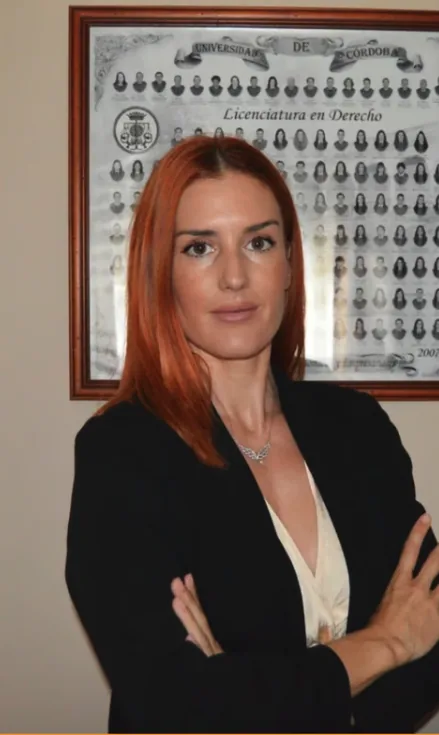
"So many applications fail on paperwork long before anyone reads the merits. Spain will not take a foreign document at face value, so get the apostille and the sworn translation done, and in the right order, and you remove one of the most common reasons for delay."
— Lola Jurado · Immigration lawyer, Ilustre Colegio de Abogados de Málaga (nº 10907)
What an apostille is (the Hague Convention)
An apostille is an internationally recognised certificate that authenticates the origin of a public document — confirming that the signature, seal or stamp on it is genuine, and that the official who signed it had the authority to do so. It does not certify the content of the document; it only vouches for the official who issued it. The apostille exists because of the 1961 Hague Convention Abolishing the Requirement of Legalisation for Foreign Public Documents, to which Spain and more than a hundred other countries are parties.
The practical benefit is simple. Between two Hague countries, a single apostille replaces the older, slower chain of embassy and consular legalisations. Spain will accept a properly apostilled document from another member state without any further diplomatic certification. That is why the very first question about any foreign document is: is the issuing country part of the Hague Convention? The answer decides whether you take the fast apostille route or the longer legalisation route described further below.
Getting an apostille in the United States
The United States is a Hague member, but Americans are often surprised to learn there is no single national apostille office. Where you get an apostille depends on who issued the document. This is the single biggest source of confusion for US applicants.
- State-issued documents — birth certificates, marriage certificates, and state-level criminal records are apostilled by the Secretary of State of the state that issued them. A birth certificate from Florida is apostilled in Florida, not by the federal government.
- Federal documents — an FBI criminal-background check (the identity-history summary), and other federal documents, are apostilled by the US Department of State in Washington, DC.
For Spanish visas this distinction matters enormously, because the criminal-record certificate consulates usually want is the FBI report, which must therefore be apostilled at the federal level by the Department of State. A state police report apostilled by a Secretary of State may not be accepted in its place. Before you pay for an apostille, confirm which certificate your consulate requires and route it to the correct authority.
Apostilles in the UK, Canada, Australia and elsewhere
Other common origin countries each have their own competent authority, and the procedure varies:
- United Kingdom — apostilles are issued centrally by the Legalisation Office of the Foreign, Commonwealth & Development Office (FCDO). This covers documents such as ACRO police certificates, UK birth and marriage certificates and notarised documents. There is a standard and a premium (same-day) service.
- Canada — Canada only recently joined the Hague Convention (in force from January 2024). Apostilles are issued by Global Affairs Canada and by certain designated provincial authorities (for example in Ontario, Québec, Alberta, British Columbia and Saskatchewan). Which body applies depends on where and by whom the document was issued.
- Australia — the Department of Foreign Affairs and Trade (DFAT) issues apostilles through its offices in the capital cities. National police checks and civil-registry documents are handled there.
- Ireland, New Zealand, South Africa and most of the EU — each has a designated competent authority (usually a foreign-affairs ministry or a court) that issues the apostille directly.
The recurring lesson is that there is no universal counter. You must identify the specific competent authority for the specific document, in the specific country and region where it was issued.
Non-Hague countries: the legalisation chain
If the document comes from a country that is not a party to the Hague Convention, it cannot be apostilled at all. Instead it must be legalised through a diplomatic chain — the older, multi-step process the apostille was designed to replace. The exact steps vary, but the pattern is usually:
- First, the document is certified by the relevant authority in the issuing country (often a foreign-affairs ministry, and sometimes a notary before that).
- Next, it is legalised by the Spanish consulate or embassy in that country, which confirms the preceding signatures.
- Finally, in some cases, it is legalised again by the Spanish Ministry of Foreign Affairs in Spain.
Legalisation is slower, involves more offices and more fees, and offers less room for error — which is exactly why applicants from non-Hague countries should build in extra time and confirm each step in advance.
Only once the document has completed the correct chain — apostille for Hague countries, legalisation for the rest — is it ready to be translated.
What a sworn translation (traducción jurada) is
Spanish authorities require documents to be presented in Spanish, but they do not accept just any translation. What they generally require is a traducción jurada — a sworn translation produced by a traductor-intérprete jurado, an official translator appointed by Spain's Ministry of Foreign Affairs. That translator signs, stamps and certifies the translation, giving it official legal value.
This is a critical distinction. An excellent translation from a general translation agency, or a bilingual friend, is normally not sufficient, however accurate it may be. The authority is not just checking the words; it is relying on the sworn translator's official certification. A sworn translator can usually work from documents anywhere, but the appointment must be a Spanish one recognised by the Ministry of Foreign Affairs — a translator sworn in another country is not automatically accepted.
The order of operations — apostille first
Here is the step that catches out even careful applicants: the apostille (or legalisation) comes first, and the translation second — and the translation must cover the apostille too.
The reason is that the apostille is a physical certificate attached to the original document. If you translate the document before the apostille is added, the finished sworn translation will not include the apostille, because it did not exist yet. Spanish authorities then receive a translated document with an untranslated apostille — a mismatch that frequently leads to a request for correction or an outright rejection.
The correct sequence is therefore:
- Step 1 — obtain the original public document (for example, the FBI report or a birth certificate).
- Step 2 — have it apostilled by the correct competent authority (or legalised, for non-Hague countries).
- Step 3 — have a sworn translator translate the whole thing into Spanish, including the apostille and any stamps.
Apostille first, translate second, and translate the apostille as well. Doing these steps out of order is one of the most common — and most avoidable — causes of delay.
Which documents typically need this
Requirements vary by visa type and by consulate, but the documents that most often need both an apostille and a sworn translation are your civil-status and background records. The table below is a general guide, not a checklist for your specific case.
| Document | Apostille / legalisation? | Sworn translation? |
|---|---|---|
| Criminal-record / police certificate (e.g. FBI, ACRO) | Yes — usually required | Yes |
| Birth certificate | Yes — when submitted (e.g. family routes) | Yes |
| Marriage certificate | Yes — for spouse / family applications | Yes |
| Medical certificate | Often no apostille; confirm consulate rules | Yes (into Spanish) |
| Bank statements / proof of funds | Usually no apostille | Frequently yes |
| Passport | No — accepted as issued | No |
Notice that not everything needs an apostille, and not everything needs a translation — but the two big civil documents, the criminal record and the certificate proving your family status, almost always need both. Always confirm the exact list against your specific visa and the consulate handling your case, because a document such as a criminal record for the non-lucrative visa may have different framing than for other routes.
Validity windows and timing
Spanish consulates treat many documents as having a limited "shelf life", and this trips up applicants who prepare too early. Two overlapping windows matter:
- Issue-date validity — documents such as criminal-record and medical certificates are frequently only accepted if they were issued within the last three months before you submit. An FBI report obtained a year ago will usually be rejected as stale.
- Apostille date — some consulates also look at how recently the apostille itself was affixed, treating it as part of the document's freshness.
The practical consequence is that timing must be sequenced backwards from your appointment date. If you obtain and apostille a criminal record too early, it may expire before your consular appointment; if you leave it too late, you may run out of time for the apostille and the sworn translation, each of which takes days or weeks. Because the whole chain — issue, apostille, translate — has to land inside a narrow validity window, applicants often underestimate how tight the schedule really is. Build in buffer, confirm the current window with your consulate, and use the NLV document validity calendar if you are preparing a US non-lucrative file.
The most common mistakes that cause refusals
Most document problems fall into a handful of recurring patterns. Avoiding these removes a large share of the risk:
- Wrong apostille authority — sending a federal document to a state office, or a state document to the Department of State. Route each document to its correct competent authority.
- Translating before apostilling — so the apostille itself ends up untranslated. Always apostille first, then translate the whole document plus the apostille.
- Using an ordinary translation — an agency or self-made translation instead of a proper traducción jurada by a Spain-appointed sworn translator.
- Stale documents — obtaining certificates too early so they fall outside the validity window by the time of the appointment.
- Wrong certificate — submitting a state or local police report where the consulate specifically wants a national or federal criminal record.
- Incomplete translation — a sworn translation that omits stamps, seals or the apostille, so it does not match the original document exactly.
- Assuming one country's rules apply everywhere — apostille procedures differ by country and by document; last year's process for a friend may not be this year's process for you.
None of these mistakes is exotic. They are the everyday reasons that otherwise strong applications — including well-prepared retirement visa files — get bounced back for correction, costing weeks. Getting the document chain right the first time is almost always faster and cheaper than fixing it after a refusal; a focused pre-submission NLV file review is meant to catch exactly these defects before filing.
Frequently asked questions
Do I apostille first or translate first?
Apostille first, then translate — and make sure the sworn translation covers the apostille as well as the document. Translating first usually leaves the apostille untranslated, which causes problems.
Does an ordinary certified translation work for Spain?
Generally no. Spanish authorities normally require a sworn translation (traducción jurada) by a translator officially appointed by Spain's Ministry of Foreign Affairs, not just any professional translation.
My country is not in the Hague Convention — what do I do?
The document cannot be apostilled. It must be legalised through the diplomatic chain instead, typically ending with the Spanish consulate and sometimes the Spanish Ministry of Foreign Affairs, before being sworn-translated.
How long is an apostilled criminal record valid?
Many consulates only accept criminal-record and medical certificates issued within the last three months, and may also look at the apostille date. Confirm the exact window with your consulate and time everything backwards from your appointment.
General information, not legal advice. Apostille, legalisation and translation requirements vary by country, by document and by consulate, and they change over time. Confirm the current rules for your specific visa and your specific consulate before acting.