
One of the most frequent — and most misunderstood — questions we receive from foreign families living in Spain is simple: "Our baby was born here. Is the baby Spanish?" The intuitive answer, borrowed from countries like the United States, is "yes, of course." But Spanish nationality law does not follow that logic. Spain does not grant automatic citizenship purely because a child is born on its territory. Understanding what actually happens — and the significant advantage a Spanish birth does confer — matters enormously for planning a family's future here.
On this page
Spain has no pure jus soli A child born here usually takes the parents' nationality The key advantage: nationality by residency after one year Protection against statelessness How the child's residency is tied to the parents Registering the birth at the Registro Civil Passport and consulate steps for the child Planning ahead as a foreign family Frequently asked questions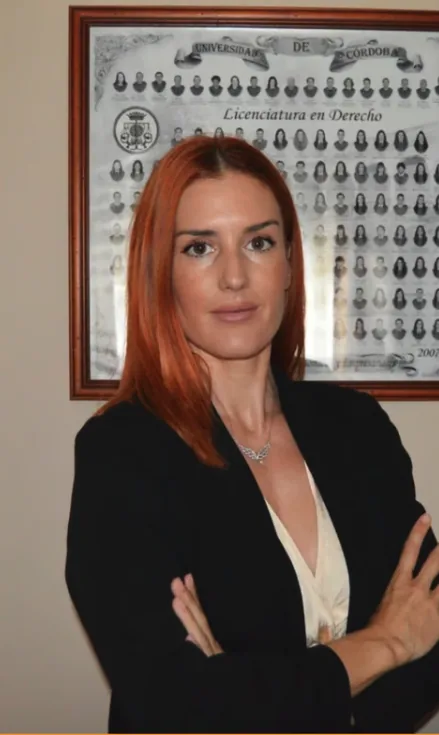
"A baby born in Spain is not automatically Spanish; there is no pure right of soil here. But a Spanish birth does confer a real and powerful advantage on the path to nationality, and understanding exactly what it does and does not give matters for the whole family's plans."
— Lola Jurado · Immigration lawyer, Ilustre Colegio de Abogados de Málaga (nº 10907)
Spain has no pure jus soli
Nationality systems around the world rest on two broad principles. Jus soli ("right of the soil") grants nationality based on the place of birth; jus sanguinis ("right of blood") grants it based on the nationality of the parents. The United States, Canada and many countries of the Americas apply a strong version of jus soli, so a child born on their territory is a citizen almost automatically.
Spain, like most of continental Europe, is fundamentally a jus sanguinis country. Spanish nationality of origin is transmitted primarily through parentage: a child born to a Spanish parent is Spanish, wherever in the world the birth takes place. Being physically born within Spanish borders, on its own, does not make a child Spanish. This is the single most important point for foreign parents to absorb, because it upends the assumption most families arrive with.
A child born here usually takes the parents' nationality
If neither parent is Spanish, a baby born in Spain does not become Spanish by the mere fact of the birthplace. Instead, the child generally acquires the nationality of the parents, according to the laws of the parents' own country. A child born in Málaga to two French citizens is, as a starting point, French; a child born to Moroccan parents is Moroccan; a child born to a British mother and an Argentine father may hold both nationalities, depending on each country's rules.
The birthplace changes very little about the child's initial nationality. What matters first is the law of the parents' country — and whether that law transmits nationality to a child born abroad.
This is why the parents' own nationality law must always be checked. Some countries transmit nationality freely to children born anywhere in the world; others place conditions on children born abroad. That analysis determines the child's starting position — and, crucially, whether any risk of statelessness arises.
The key advantage: nationality by residency after one year
Here is the good news, and it is substantial. While a Spanish birth does not confer automatic citizenship, it dramatically shortens the road to it. The ordinary route to Spanish nationality by residency requires ten years of legal, continuous residence. But Spanish law sets out reduced periods for certain situations — and one of the shortest of all applies to a person born in Spanish territory.
A child born in Spain can apply for Spanish nationality by residency after just one year of legal, continuous and immediately prior residence in Spain. That single year, compared with the standard ten, is one of the most valuable advantages Spanish nationality law offers to foreign families — and it flows directly from the fact that the child was born on Spanish soil.
For a fuller explanation of how the residency route works in general — the legal-residence requirement, continuity, the integration tests and the oath — see our dedicated note on Spanish citizenship by residency. The one-year period for the Spanish-born simply compresses that same framework into a far shorter timeline.
Protection against statelessness
What happens if a child born in Spain would not acquire any nationality — because, for instance, the parents' country does not transmit its nationality to children born abroad? International law and Spanish law both treat statelessness as something to be prevented, and Spanish nationality law contains specific safeguards for exactly this situation.
Where a child born in Spain would otherwise be left with no nationality at all, Spanish nationality of origin may be attributed to the child, so that no child born here is stranded without a country. This protection is a limited, residual rule — it exists to close a gap, not to serve as a general route to Spanish citizenship — but for the small number of families it affects, it is decisive. Establishing that the child would genuinely be stateless under the parents' law requires careful documentation, and this is one of the areas where getting the analysis right at birth avoids serious problems later.
How the child's residency is tied to the parents
Because a foreign child born in Spain is, in immigration terms, a foreign national, the child's right to reside in Spain is not automatic either. In practice, the child's legal residence is closely tied to the status of the parents. A child born to parents who hold valid residence in Spain can generally be regularised and documented on the basis of the parents' authorisation, so that the whole family holds lawful residence together.
This link matters enormously for the one-year nationality route described above, because that route depends on the child's residence being legal and continuous. If the parents' residence lapses or was never properly held, the child's own legal residence — and therefore the clock towards nationality — can be disrupted. Keeping the parents' authorisations valid and renewed is, in effect, protecting the child's future access to Spanish nationality.
For families who arrived through one immigration route and now wish to consolidate everyone's status — including bringing other relatives — our note on bringing family to Spain through reunification explains how family status is built and maintained across the household.
Registering the birth at the Registro Civil
Every birth in Spain must be registered at the Spanish Civil Registry (Registro Civil), regardless of the parents' nationality. This registration is a civil formality, not a grant of nationality: registering a foreign child's birth at the Registro Civil records the fact of the birth in Spain, but it does not turn the child into a Spanish national.
The registration is typically initiated shortly after the birth — often the hospital transmits the initial data, and the parents then complete the registration within the statutory window. The parents should be prepared to present:
- The medical certificate of birth issued by the hospital or clinic.
- Identity documents of both parents (passports and residence cards where applicable).
- Documents evidencing the parents' civil status and, where relevant, their marriage.
- Any documents required to establish filiation and the child's name.
The resulting Spanish birth certificate is an important document in its own right: it is the proof that the child was born in Spanish territory, which is precisely the fact that later unlocks the reduced one-year nationality period and any statelessness protection. Keeping it safe, and obtaining official copies, is worthwhile from day one.
Passport and consulate steps for the child
Because a foreign child born in Spain generally holds the parents' nationality, the parents will usually also need to document the child with their own country's authorities — most often the relevant embassy or consulate in Spain. This is how the child obtains a foreign passport and is recognised as a national of the parents' country.
The typical sequence is:
- Spanish birth certificate first — obtained from the Registro Civil, often with a legalised or multilingual (plurilingual) version for use abroad.
- Registration with the parents' consulate — many countries require the birth to be registered or transcribed in their own civil registry before issuing a passport.
- Passport application — the child's first passport is then issued under that country's rules, which vary widely on documents, appointments and processing times.
Where a child may be entitled to more than one nationality — for example a dual-nationality couple — each consulate's rules should be checked separately, since some countries restrict or condition the transmission of nationality to children born abroad, which is also where the statelessness question can arise.
American parents face the strictest version of that conditioning, and it is worth reading before the birth rather than after it: US citizenship passes to a child born abroad only if the parent meets a physical-presence test measured in years already lived in the United States. Our page on having a baby in Spain as US citizens sets out the transmission rules, the Consular Report of Birth Abroad and the order in which the passport and Social Security number have to be requested here.
Planning ahead as a foreign family
Pulling these threads together, a foreign family expecting a baby in Spain should think about several things well before, and shortly after, the birth:
- Keep residence current. The child's future one-year nationality route depends on legal, continuous residence — which in turn depends on the parents' authorisations staying valid and renewed on time.
- Register the birth promptly. Complete the Registro Civil registration within the statutory window and obtain official copies of the Spanish birth certificate.
- Document the foreign nationality. Register the birth with the relevant consulate and apply for the child's passport, allowing for that country's processing times.
- Check for statelessness risk. Confirm early whether the parents' law transmits nationality to a child born abroad; if it does not, raise the statelessness protection promptly.
- Look ahead to the one-year application. Once the child has completed a year of legal residence, the reduced residency route to Spanish nationality becomes available and can be prepared in advance.
Approached this way, the birth of a child in Spain becomes not a source of confusion but a genuine opportunity: the child holds the parents' nationality from the start, is protected against statelessness, and stands only one year of residence away from the option of Spanish nationality — an option most foreign residents wait ten years to reach.
Frequently asked questions
Is my baby Spanish just because they were born in Spain?
No. Spain does not apply pure jus soli. A child born in Spain to foreign parents is not automatically Spanish and generally takes the nationality of the parents. Spanish nationality can be reached later, most commonly by residency.
How soon can a Spanish-born child apply for Spanish nationality?
After just one year of legal, continuous and immediately prior residence in Spain — a strongly reduced period compared with the ordinary ten years, and one of the main advantages of being born on Spanish soil.
What if the child would not get any nationality from the parents?
Spanish law protects against statelessness. Where a child born in Spain would otherwise have no nationality, Spanish nationality of origin may be attributed so the child is not left stateless.
Does registering the birth at the Registro Civil make the child Spanish?
No. Registration at the Registro Civil records the fact of the birth in Spain; it does not by itself grant Spanish nationality. The child still generally holds the parents' nationality.
General information, not legal advice. Nationality outcomes depend on the parents' own nationality law, the child's documented legal residence, and current Spanish rules, which change and must be confirmed for your family's specific circumstances.