
Many Russian families and professionals still ask a simple question: is it realistic to move to Spain in 2026, and if so, how? The answer is yes — Spain has no blanket bar on Russian nationals, who apply through the same third-country (non-EU) residence routes as any other applicant. What has changed since 2022 is not the law so much as the practical texture: banking is harder, the source of funds is scrutinised more closely, and one popular option — the Golden Visa — has closed entirely. This page walks through the routes, the paperwork specific to Russian documents, and the caveats we think an applicant deserves to hear up front. It is general information, not legal or tax advice, and current rules should always be confirmed for your case.
On this page
Your starting point: a non-EU applicant The realistic residence routes Non-lucrative visa for the financially independent Digital nomad visa for remote earners Entrepreneur route and the Beckham regime Highly qualified professional Student route Documents: apostille and sworn translation Honest notes on the current context Tax and the Russia–Spain treaty The established Russian community Frequently asked questions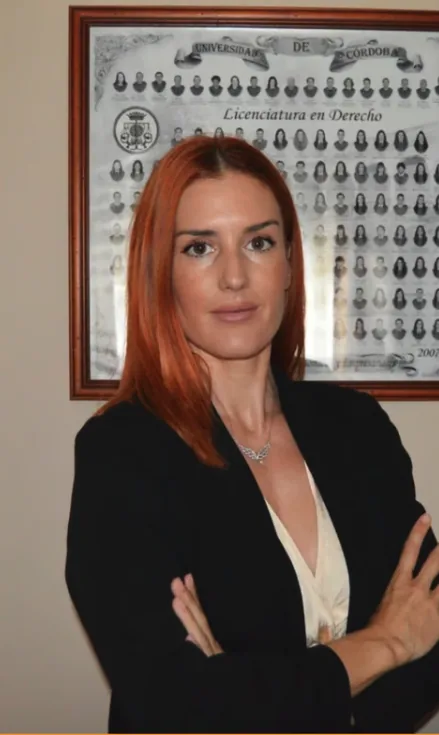
"For Russian clients the law is rarely the obstacle — the documents and the source-of-funds story are. Get those right, in the right order, and the route usually opens."
— Lola Jurado · Immigration lawyer, Ilustre Colegio de Abogados de Málaga (nº 10907)
Your starting point: a non-EU applicant
The most useful thing to understand first is that a Russian passport holder is, for Spanish immigration purposes, a third-country national — the same broad category as an American, a Briton or a Canadian. There is no separate "Russian track" and no automatic exclusion. You apply for residence under the ordinary rules, and you succeed or fail on whether you meet the specific requirements of the route you choose: sufficient income or savings, a clean criminal record, private health insurance, and honestly evidenced documents. The extra difficulty for Russian applicants is rarely legal eligibility; it is the practical machinery of proving income, moving money and obtaining documents in the current environment.
The realistic residence routes
Because Russian nationals are non-EU, the entry point is almost always a national (type D) visa applied for at a Spanish consulate, or in some cases a residence authorisation processed from within Spain. Several routes remain genuinely open. Which one fits depends on whether your income comes from savings, remote work, a business, an employer or a place of study.
| Route | Best suited to | Work in Spain? |
|---|---|---|
| Non-lucrative visa | Financially independent people, retirees, passive-income holders | No local work |
| Digital nomad visa | Remote employees and freelancers with foreign clients | Remote/foreign work only |
| Entrepreneur (with Beckham option) | Founders and business builders relocating an activity | Yes, own venture |
| Highly qualified professional | Skilled professionals with a Spanish employer or intra-company transfer | Yes, qualified role |
| Student | University, master's, language or vocational students | Limited, with authorisation |
Non-lucrative visa for the financially independent
The non-lucrative visa is the classic route for someone who can support themselves in Spain without working locally — retirees, people living off savings and investments, or anyone with reliable passive income. The core requirements are proof of sufficient stable financial means (referenced to a multiple of Spain's public income indicator, plus more for each dependant), full private health insurance with a Spanish-authorised insurer, and a clean criminal-record certificate. For Russian applicants the sensitive part is the financial evidence: bank statements, asset statements and, crucially, a coherent account of where the money came from. We cover the mechanics of this route in detail in our non-lucrative (retirement) visa guide. It does not permit local employment, so it suits the genuinely financially independent rather than someone who needs to earn in Spain.
Digital nomad visa for remote earners
Introduced by the Startup Act, the digital nomad visa lets remote workers and freelancers live in Spain while working for companies or clients located outside Spain. It fits Russian IT specialists, consultants and creatives who already earn from foreign clients or a foreign employer. Typical requirements include a demonstrable professional relationship of some minimum duration, proof that the work can be performed remotely, qualifications or experience, income above a set threshold, and the usual clean record and health cover. The practical challenge for Russian applicants is documentary: contracts, invoices and payment evidence must hold together, and payment flows that route through sanctioned or restricted banking channels can complicate the proof of income. This route can also be paired with favourable tax treatment, which leads naturally to the next section.
Entrepreneur route and the Beckham regime
Russian founders relocating a genuine business activity can look at the entrepreneur route, and — separately — at the special expatriate tax regime commonly called the Beckham regime, which can apply to qualifying employees and certain entrepreneurs who become Spanish tax resident after a period abroad. The immigration authorisation and the tax election are two different things that need to be planned together. For a founder building or moving a company, this combination can be attractive, but it demands substance: a real activity, a defensible structure, and care about where a foreign company is effectively managed once you live in Spain. Our Beckham regime guide sets out how the tax side works and who realistically qualifies. As always, whether a Russian-owned foreign company sits cleanly within these rules is fact-specific and must be reviewed individually.
Highly qualified professional
If you have a firm job offer from a Spanish employer for a qualified role, the highly qualified professional route (and related work authorisations, including intra-company transfers) may be the fastest and most secure option, because the sponsoring employer carries much of the process. This suits senior specialists — engineers, researchers, managers, experienced technology professionals — whose skills are in demand. For Russian candidates the route often depends on already having an international employer or a Spanish company willing to sponsor, so it tends to work best for people whose careers already have a cross-border dimension rather than for a cold relocation.
Student route
The student route is frequently underrated as a first step. A place at a Spanish university, a recognised master's programme, a business school or an accredited language or vocational course can support a student residence authorisation, which allows you to live in Spain, bring certain family members in defined circumstances, and — with authorisation — work on a limited basis. For younger Russian applicants, or families whose move is anchored around a child's education, studying in Spain can be both a genuine goal in itself and a foundation from which other routes become reachable over time. The requirements are lighter on income than the non-lucrative visa but still demand proof of means, health cover and a clean record.
Documents: apostille and sworn translation
This is where Russian applications succeed or stall on detail. Almost every route requires personal documents issued in Russia — above all the criminal-record certificate, and often birth, marriage or qualification certificates — to be both legalised and translated in a way Spanish authorities accept.
Russia is a party to the Hague Apostille Convention, so Russian public documents are legalised by apostille rather than by full consular legalisation.
In practice this means two steps for each document:
- Apostille — the Russian criminal-record certificate (and any other official Russian document you must submit) is issued and then stamped with a Hague apostille by the competent Russian authority. Because Russia is in the Convention, this single stamp replaces the older, slower chain of consular legalisation.
- Sworn Russian→Spanish translation — the apostilled document is then translated from Russian into Spanish by a sworn (traductor jurado) translator recognised by Spain's Ministry of Foreign Affairs. An ordinary translation is not enough; it must be an official sworn translation, and typically the apostille itself is translated too.
Timing matters. Criminal-record certificates usually have a limited validity window from the date of issue, so getting the apostille and the sworn translation done too early can leave you with an expired document, and doing them too late can miss a consular appointment. Sequencing these steps correctly, and confirming exactly which Russian authority issues the apostille for your document type, is one of the most common places we help.
Honest notes on the current context
We think Russian applicants are best served by candour about the environment since 2022, so here is a neutral, factual summary of the practical hurdles. None of this is a legal bar; all of it can affect timing, evidence and feasibility, and every point should be re-checked against the current rules at the moment you apply.
- Banking and payments. Restrictions affecting parts of the Russian banking system, including limits on SWIFT connectivity for certain banks, can make it harder to transfer funds to Spain and to open or fund Spanish accounts. Expect banks and authorities to ask more questions and to move more slowly.
- Proving the lawful source of funds. Anti-money-laundering scrutiny of Russian-origin wealth has tightened. For income- or savings-based routes you should be ready to document, clearly and consistently, where your money came from and how it was lawfully earned — payslips, business records, sale contracts, tax filings. A vague explanation is a common cause of delay or refusal.
- Tighter overall scrutiny. Consulates and banks generally apply closer review to Russian applications and transfers than a few years ago. This is about process friction, not eligibility, but it means realistic timelines and complete, coherent files matter more than ever.
- The Golden Visa has ended. Spain's residence-by-investment "Golden Visa" route closed in April 2025 and is no longer available to anyone, including Russian investors. If you were counting on that path, you now need one of the routes above instead. We explain the alternatives in our note on the Golden Visa ending and what replaces it.
Tax and the Russia–Spain treaty
If you become resident in Spain you generally become Spanish tax resident, taxed on worldwide income, subject to any applicable double-tax treaty and to any special regime you qualify for. The important caveat for Russian nationals is that the status of the Russia–Spain double taxation treaty has recently been affected, and its practical application should not be assumed. Provisions relating to relief from double taxation and to the treatment of specific income types may operate differently than they did before, or may be suspended in part. Because this directly affects how your Russian-source income, pensions or dividends are treated once you live in Spain, the treaty position must be confirmed for your specific circumstances and for the current year — do not plan around a treaty benefit without checking that it still applies.
The established Russian community
One reassuring reality is that Spain already has a long-established, well-integrated Russian-speaking community, which makes settling in considerably easier — Russian-speaking schools, doctors, agents, restaurants and social networks exist in the places where the community has clustered. The main hubs are well known:
- Costa Blanca — above all Torrevieja and the surrounding Alicante coast, historically one of the largest Russian-speaking concentrations in Spain, with an extensive network of Russian-run services.
- Costa del Sol — Marbella and its neighbours, popular with families seeking a higher-end coastal lifestyle, good international schools and year-round sun.
- Barcelona — for those who prefer a large, cosmopolitan city with strong cultural life, universities and international business connections.
Beyond these, Madrid, Valencia and the Balearic and Canary Islands all draw Russian-speaking residents. Popular destinations tend to combine climate, an existing community, schooling options and good connections, and the right choice interacts with tax and residence planning — for instance, wealth-tax rules and regional variations differ meaningfully across Spain, so where you settle is not only a lifestyle decision.
Moving from Russia to Spain in 2026 is still very achievable for people who plan carefully, choose the route that matches their real situation, and prepare their documents and their source-of-funds story properly. The routes are open; the paperwork is specific; the context requires honesty. If you would like a clear read on which route fits you and what your file needs to contain, that is exactly what a short private review can give you.
Frequently asked questions
Can a Russian citizen still get Spanish residence in 2026?
Yes. Russian nationals apply through the ordinary non-EU routes — non-lucrative, digital nomad, entrepreneur/Beckham, highly qualified or student. The hurdles are practical (banking, source of funds, scrutiny) rather than a legal bar. Confirm current rules for your case.
How do I legalise my Russian criminal-record certificate?
Russia is in the Hague Apostille Convention, so it is legalised by apostille, then translated from Russian into Spanish by a sworn translator recognised by Spain. Mind the certificate's validity window when timing these steps.
Is the Golden Visa an option for Russian investors?
No — Spain's Golden Visa route ended in April 2025 and is closed to everyone. You would use one of the other residence routes instead.
Will the Russia–Spain tax treaty protect me from double tax?
Do not assume so. The treaty's status has recently been affected and its application may differ or be partly suspended. The position must be confirmed for your circumstances and the current year before you rely on it.
General information, not legal or tax advice. Immigration routes, sanctions, banking access, tax-treaty status, thresholds and consular practice change and must be confirmed for your circumstances and the current year. A lawyer–client relationship begins only with a signed engagement.