
A senior hire rarely moves alone. Schools, a spouse's work options, civil documents, housing and arrival appointments all affect whether the relocation is realistic. Spain's Highly Qualified Professional permit is useful because it treats family movement as part of the main relocation plan, not as an afterthought. The client PDF highlights this as one of the main benefits of the route: family residence can be processed simultaneously or successively, and eligible family members may work legally in Spain.
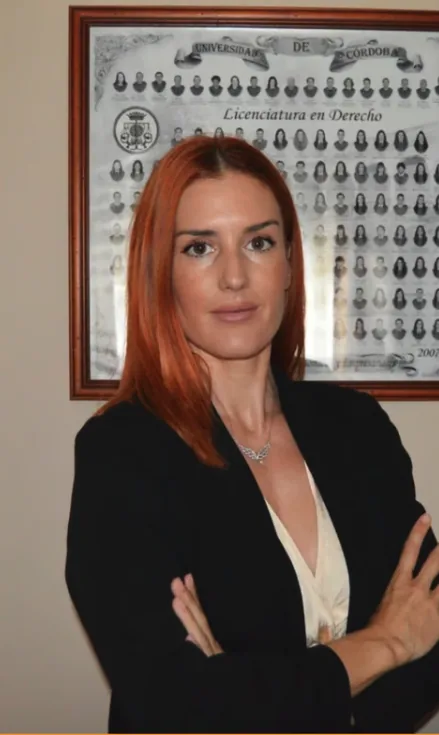
"A senior hire rarely moves alone, and this route's real strength is that it treats family as part of the plan, not an afterthought. Spouses, partners and dependent children can usually come along, often with the right to work, so we prepare the family file alongside the main one."
— Lola Jurado · Immigration lawyer, Ilustre Colegio de Abogados de Málaga (nº 10907)
Who can be included
The usual family categories are the spouse or registered partner, minor children and adult children who are financially dependent. The stronger and cleaner the relationship evidence, the easier the family side becomes. Marriage certificates, registered partnership certificates and birth certificates should be recent enough for the authority's requirements, legalised or apostilled where needed, and translated by a sworn translator if not already in Spanish.
Unmarried partners need particular care. A registered partnership is usually much easier to evidence than an informal relationship. If the relationship is not formally registered, the facts must be reviewed before assuming the family route is available.
Work rights for accompanying family members
The practical value of this route is not only residence. Family members granted residence under the HQP framework are generally authorised to work in Spain when they are of working age. That is a major difference from routes where dependants may have residence but limited practical independence. For dual-career households, this can decide whether the Spanish move is commercially sensible.
Documents to prepare early
Family documents are often the slowest part of an otherwise fast file. The main applicant may have a job offer ready, while a spouse's certificate or a child's birth certificate is still waiting for apostille. We usually prepare the family checklist at the same time as the employer file.
- Marriage certificate or registered partnership certificate for the spouse or partner.
- Birth certificates for children.
- Evidence of economic dependency for adult dependent children.
- Passports and photographs for every family member.
- Criminal-record certificates for adult family members where required.
- Legalisation/apostille and sworn translations where documents are foreign.
Simultaneous vs successive filing
The family can often be processed with the main applicant or added later. Simultaneous filing is best when the whole household is ready and everyone intends to arrive together. It gives the family a single relocation calendar and avoids a period where the main applicant is in Spain while the spouse or children wait abroad. Successive filing can still work if school years, work commitments or document delays make a single move unrealistic.
The choice is practical, not just legal. A family with school-age children may plan around September. A spouse with a notice period may arrive later. A senior executive may need to start first while the family closes a home sale abroad. We map the route to the family's real timeline.
How this fits with the HQP and Beckham strategy
Family planning should be coordinated with the main Highly Qualified Professional application, the employer-led process and any Beckham regime election. The immigration file decides legal residence; the tax file decides how the move is taxed; the family file decides whether the relocation is workable in daily life. We treat them as one project so deadlines, documents and expectations do not conflict.
For families comparing routes, the HQP permit is often stronger than the ordinary work permit because it is faster and family-friendly. It may also be cleaner than a digital nomad strategy where one spouse has a Spanish job offer and the other wants work rights. The right route depends on the facts, but the family dimension should be tested before choosing.
What changes when the spouse also has a career
For senior professional households, the spouse's position is often just as important as the main applicant's permit. A spouse may want to work for a Spanish employer, keep a remote job, become self-employed, or pause work during the move. Each option has different immigration, tax and Social Security consequences. The HQP family route is useful because it can provide work authorisation, but that does not remove the need to plan how the spouse will actually work in Spain.
If the spouse will work for a Spanish employer, payroll and tax registration need to be coordinated after arrival. If the spouse will keep a foreign remote role, the family should review whether a Spanish employment, permanent establishment or Social Security issue arises. If the spouse will invoice as self-employed, autónomo registration and tax filings may be needed. These are not reasons to avoid the HQP route; they are reasons to avoid treating the spouse as an administrative add-on.
School-age children and timing
Families with school-age children should work backwards from the school calendar. International schools in Madrid, Barcelona, Malaga, Marbella, Valencia and other relocation hubs may require applications months ahead of the move. Public and concertado schooling may involve empadronamiento and local documentation. The immigration timeline should therefore be matched to school admission deadlines, lease start dates and the family's intended arrival month.
Where children are moving from the United States, the United Kingdom, Asia or the Gulf, parents should also think about academic records, vaccinations, translations and custody documents where relevant. A smooth family file is not only about approval; it is about landing in Spain with the paperwork needed for real life.
Adult dependent children
Adult children are more delicate than minors. The question is usually dependency: are they financially dependent on the main applicant, and can that dependency be shown? Evidence may include proof of studies, medical circumstances, financial transfers, lack of independent income or other facts that explain why the adult child forms part of the relocating household. The facts should be reviewed before the family commits to a timeline.
It is usually better to identify a weak adult-child file early than to discover the problem after the main applicant has already planned the move. In some cases there may be another route for the adult child, such as a student visa. In others, dependency can be documented properly. The key is not to assume that every family member is treated the same way.
Post-approval steps for the family
After approval, the family still needs to complete the practical Spanish steps: entry where applicable, TIE appointments, fingerprints, collection of cards, local registration and setup for healthcare, banking and school. These steps are predictable, but appointments can be tight in busy provinces. For Malaga, Madrid, Barcelona and other high-demand areas, planning appointments early can save weeks.
The family should keep copies of every approval, passport page, civil document, translation and appointment receipt. Small gaps in a family member's file can slow down a TIE appointment even where the main applicant's process is clean. We normally prepare a separate arrival checklist for each family member so the household does not rely on one generic folder.
Common family-file mistakes
The most common mistake is assuming that family documents are simple because the main applicant is strong. In reality, family documents are often issued by different authorities, in different countries, with different apostille and translation timelines. A main applicant may be ready in one week while a spouse's marriage certificate or a child's birth certificate takes a month to legalise. That mismatch can decide whether the family files together or in stages.
Another common problem is outdated civil evidence. Some authorities expect recent copies of marriage or birth certificates, not old originals from years ago. Families should request fresh certified copies where possible before starting apostilles. Name changes also need attention: if a passport, marriage certificate and birth certificate show different surnames, the file should explain the chain clearly.
Dependency evidence is the third weak point. For adult children and sometimes dependent parents in other routes, it is not enough to say the person is part of the family. The file should show financial dependency and household reality. Bank transfers, study records, medical context and lack of independent income may all matter depending on the facts.
How family planning affects route choice
Family needs can change the best immigration route. A single professional may choose between HQP, EU Blue Card, ICT or digital nomad based mainly on work facts. A family has more variables: spouse work rights, school timing, healthcare, tax residence, travel needs and long-term settlement. The HQP route is often attractive because it combines employment-based residence with family inclusion, but it should still be compared against the alternatives.
For example, an intra-company transfer may fit better where the main applicant remains within a multinational group. A digital nomad route may fit where neither spouse will work for a Spanish employer. A non-lucrative visa may suit a financially independent family that will not work. The important point is to choose the route around the household's actual plan, not only the main applicant's job title.
Documents to keep after arrival
After the family is settled, keep the approval resolutions, TIE cards, passports, civil certificates, translations, school records and padrón documents in a permanent digital folder. They may be needed for renewals, school administration, tax registration, banking and future long-term residency. A well-organised first file makes every later step easier.
It is also sensible to record the family's actual entry dates, appointment dates and card collection dates. Renewal windows and long-term residence calculations depend on real timelines, not only on the date the first approval was issued. Families who keep a clear record from the beginning spend less time reconstructing events years later.
For families who expect to remain in Spain long term, this record also supports future strategy: renewal, permanent residency after five years, school continuity and possible citizenship planning. The first HQP family file should therefore be built as the foundation for the family's next steps, not as a one-off administrative package.
Frequently asked questions
Can my spouse work in Spain?
In many HQP family files, yes. Family residence under this framework generally allows work for family members of working age.
Can children be included?
Minor children are commonly included. Adult children need documented financial dependency and should be assessed before filing.
Can we file the family later?
Often yes. Simultaneous filing is cleaner when everyone is ready, but successive filing can fit real-life timing such as school calendars, notice periods or delayed civil documents.
Do family documents need apostilles?
Foreign civil documents usually need legalisation or apostille and, where not in Spanish, sworn translation. This should be started early.