
Founders hear two short phrases before moving to Spain: Startup Law and Beckham Regime. The mistake is treating them as the same thing. Law 28/2022 is the reform that widened Spain's startup and inbound-talent framework. The Beckham Regime is the special personal income tax regime in Article 93 of the Personal Income Tax Act. They now overlap in powerful ways, but a founder still has to build a coherent file: the right qualifying route, the right evidence, the right timing and the Modelo 149 election.
On this page
What Law 28/2022 changed The five-year prior residence test Founder routes after the reform Where ENISA fits Company directors and Spanish SLs Family members under the regime Modelo 149 still decides the election A practical founder sequence Frequently asked questions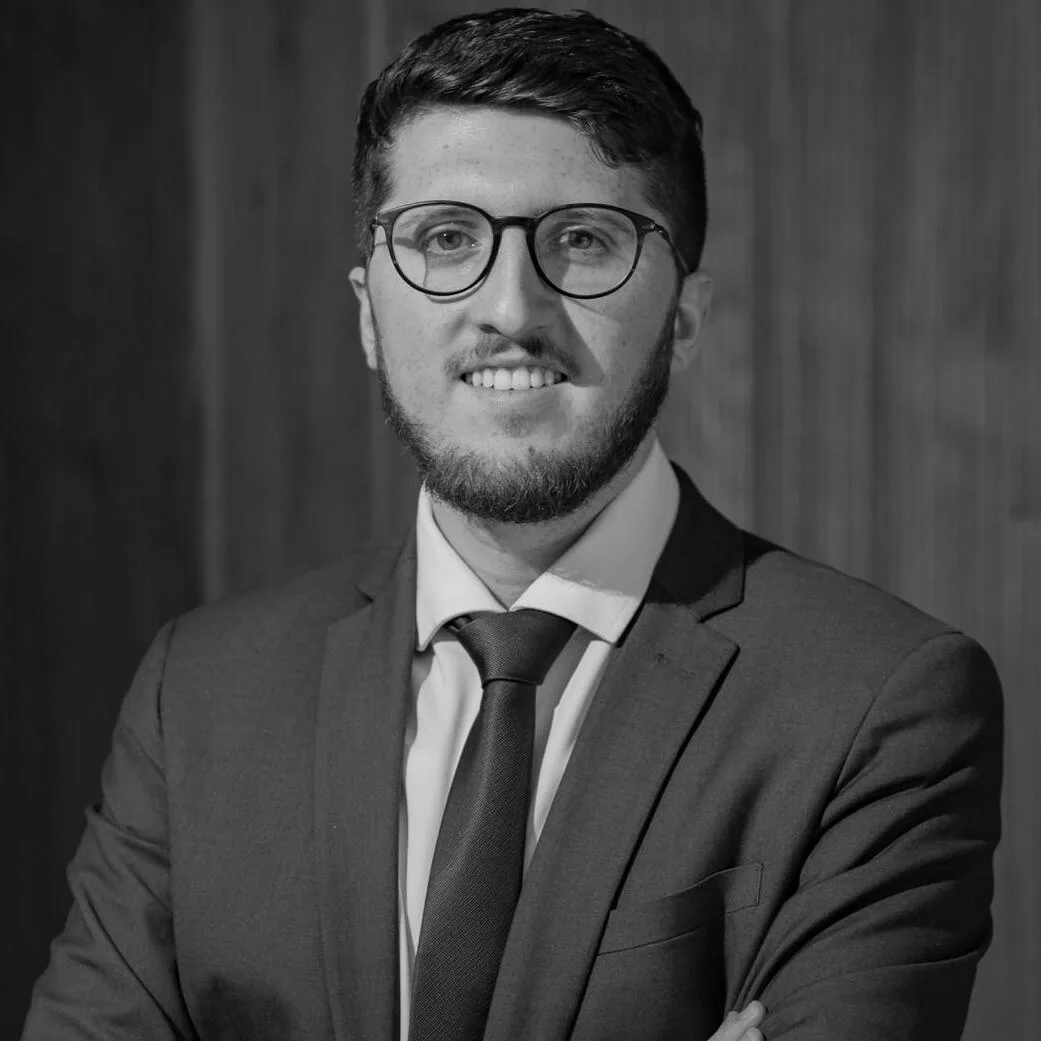
"The Startup Law widened the door, but it did not remove the locks. A founder still needs a route, evidence, timing and a Modelo 149 file that all say the same thing."
— Jacob Salama · International Tax lawyer, Ilustre Colegio de Abogados de Málaga (nº 11294)
What Law 28/2022 changed
Before the reform, the Beckham Regime was usually discussed as a regime for posted employees. That old reading missed many modern relocation cases: founders running their own companies, technical entrepreneurs building from Spain, company directors moving to manage an operating Spanish company and families relocating around a single qualifying person. Law 28/2022 changed that architecture by adapting Article 93 to a broader group of workers, professionals, entrepreneurs and investors displaced to Spain.
For founders, the reform matters in four practical ways. First, it shortened the prior Spanish tax residence lookback from ten years to five. Second, it made the company-director route more usable, while preserving important limits for passive asset-holding companies. Third, it connected the innovative-entrepreneur route to the startup ecosystem and ENISA evidence. Fourth, it opened the possibility for certain family members to elect the regime alongside the main taxpayer when the conditions are met.
The reform changed access. It did not turn every founder, investor or freelancer into a Beckham taxpayer automatically.
The five-year prior residence test
The most immediately useful founder change is the reduced lookback period. A person moving to Spain must not have been Spanish tax resident during the relevant preceding period. The old ten-year test could block people who had studied in Spain, spent an earlier work chapter here, or left Spain long before building the company they now want to relocate. The post-Startup Law rule makes those cases more realistic by using a five-year window.
This does not mean that prior presence in Spain is irrelevant. Days spent in Spain, family location, habitual home, economic interests and documentation from earlier years may still matter when establishing whether a person was tax resident. For a founder, the key is to check the history before designing the relocation. If the five-year test is not clean, no amount of ENISA evidence or company structuring fixes the first gate.
Founder routes after the reform
There is no single "founder route" into the Beckham Regime. A founder may be an employee of a foreign or Spanish company, a director of a Spanish SL, an innovative entrepreneur, a highly qualified professional, or a remote worker using the digital-nomad framework. The correct route depends on what the person will actually do in Spain and how the company is structured.
| Profile | Common route to analyse | Main evidence issue |
|---|---|---|
| Founder building a new innovative project | Entrepreneurial activity / ENISA | Innovation, scalability and economic interest |
| Founder running a Spanish SL | Company director / administrador | Active company, genuine role and remuneration |
| Technical consultant serving startups | Highly qualified professional or entrepreneur | Qualification, client profile and activity category |
| Remote employee of foreign company | Digital nomad plus Beckham analysis | Employment status, employer documents and timing |
| Investor or family office principal | Often not enough by itself | Active role versus passive wealth management |
The same person can sometimes plausibly fit more than one route. That is not a reason to be vague; it is a reason to choose deliberately. A file that says "entrepreneur" in the residence narrative, "consultant" in the tax registration and "director" in the Modelo 149 supporting evidence may create avoidable friction. Route selection should happen before the move, not after the first Spanish filings are already made.
Where ENISA fits
ENISA is central when the founder relies on the innovative-entrepreneur route. In that route, the file has to show that the activity is innovative and/or of special economic interest for Spain, with the favourable report acting as the evidential bridge. This is why the ENISA report is treated as a core document in many Beckham founder files, not as a marketing endorsement.
A strong ENISA file does not merely say that a company is a startup. It explains the product or service, the market, the founder's role, the technology or methodology, the financial plan, the expected Spanish footprint and the reason the project is innovative or scalable. For AI, SaaS, Web3 and technical consulting projects, the challenge is often proving substance: what is proprietary, what is defensible, what is Spain-based and what is more than a generic service business.
Company directors and Spanish SLs
Law 28/2022 also made the director route more important. A founder who sets up or joins a Spanish SL may be able to analyse the regime through a genuine director or administrador position. This is different from the ENISA route. It focuses less on proving that the project is innovative and more on whether the role is real, the company is active and the ownership/activity limits are respected.
The main danger is treating a passive holding structure as if it were an operating business. A Spanish company that only holds investments, real estate or family assets can create problems under the passive asset-holding limitation. By contrast, a real operating SL with clients, contracts, staff or product activity gives the file something more concrete to stand on. The director route also requires careful remuneration planning: salary, director fees, dividends and capital gains are not interchangeable for Beckham purposes.
For deeper planning on this route, read the guides on company directors and autonomo societario / SL founders.
Family members under the regime
The reform also matters for family relocation. Certain family members may be able to elect the regime when they accompany the main taxpayer or move within the applicable window and meet the legal conditions. For private-client founder moves, this can be as important as the founder's own rate: a spouse may have employment, investments, board roles or carried interest that needs separate analysis.
Do not assume that family eligibility follows automatically from residence permission. Immigration family reunification, EU-family residence rights and Beckham associated-taxpayer rules are different concepts. The family file should identify who is the main taxpayer, who is an associated taxpayer, when each person moves, what income each person has and whether the relative income limits and timing conditions are respected.
Modelo 149 still decides the election
The Startup Law widened the eligibility map, but it did not remove the formal election. The taxpayer still uses Modelo 149 to opt into the special regime, and the election has to be made on time. For founders, the six-month window is often where good planning is won or lost, because the clock may be tied to the start date of the qualifying circumstance rather than to the date the founder emotionally thinks of as "moving".
A strong Modelo 149 file links the legal route to dated evidence: employment or director appointment, ENISA report or entrepreneur evidence, Social Security registration where relevant, tax registration, residence documents and the relocation timeline. The point is not to flood the file with paper; it is to make the narrative easy to verify.
A practical founder sequence
For a founder considering Spain, the safest sequence is usually to decide the route before triggering Spanish tax residence. First, review the five-year prior residence test and any treaty-residence issues. Second, map the company structure: who owns what, where management decisions happen, where contracts sit and whether a Spanish SL is needed. Third, choose the qualifying route: ENISA entrepreneur, company director, employee, highly qualified professional or another pathway. Fourth, prepare the evidence before the first Spanish filings create a different story.
Only then should the founder coordinate the residence application, Social Security or RETA position, Spanish tax registrations and Modelo 149. The practical aim is simple: when the Tax Agency reads the file, the founder's move to Spain should look like the consequence of a qualifying activity, not like a lifestyle move retrofitted with tax language after arrival.
Frequently asked questions
Did the Startup Law create the Beckham Regime?
No. The regime already existed in Article 93, but Law 28/2022 changed its scope and made it more usable for certain founders, directors, entrepreneurs and family members.
Can I rely on the Startup Law if I am just a freelancer?
Ordinary freelancing is not enough by itself. The file must fit a qualifying route, such as innovative entrepreneurial activity, a genuine director role or a highly qualified professional route.
Do I need a Spanish SL?
Not always. Some founders use an entrepreneur or remote-worker route without immediately forming a Spanish company; others need a Spanish SL for the director route or operating structure. The corporate choice should match the tax and immigration route.
Does a Startup Law residence approval guarantee Beckham treatment?
No. Residence and tax are separate. A residence approval may support the story, but the taxpayer still has to meet Article 93 conditions and elect the regime correctly through Modelo 149.
Can my spouse use the Beckham Regime too?
Potentially, if the associated-taxpayer conditions are met. The spouse's move date, relationship to the main taxpayer and income profile need separate review.
General information, not legal or tax advice. Sources reviewed July 2026: BOE Law 28/2022 on the startup ecosystem; BOE Law 35/2006 Article 93; AEAT Modelo 149 guidance and instructions for the special regime; ENISA startup certification and innovative-entrepreneur materials. Rules, procedures and administrative practice change and must be confirmed for the specific year and facts.