
SaaS founders relocating to Spain sit at the intersection of three worlds: an income-tax regime built for displaced workers, a startup ecosystem shaped by the Startup Law 28/2022, and a cross-border corporate structure that usually predates the move. The Beckham Regime can be extremely valuable for a founder — a flat 24% rate on the general base up to the threshold, and Spanish tax broadly on Spanish-source income for the covered years — but a SaaS founder's file is rarely as simple as a salaried arrival. The cap table, the vesting cliff, the option pool and the parent company all have to be explained in a single coherent story.
This guide focuses specifically on the SaaS and venture-backed reality: co-founder equity and vesting, ISOs and RSUs, the ENISA innovative-and-of-economic-interest route as the natural fit for a scalable product, a Delaware or other foreign HoldCo sitting above a Spanish subsidiary, and the permanent establishment and place-of-effective-management risk that appears the moment a technical or executive co-founder starts working from Spain. It is deliberately distinct from our broader AI and software founders guide and the autonomo societario guide: here the emphasis is the venture-funded company mechanics, not the individual professional.
On this page
Cap tables, co-founders and vesting ISOs, RSUs and equity compensation Why ENISA fits a scalable SaaS product Delaware HoldCo and a Spanish subsidiary Permanent establishment and effective management Transfer pricing between entity and parent Salary, dividends and a future exit VC funding, the narrative and RETA Frequently asked questions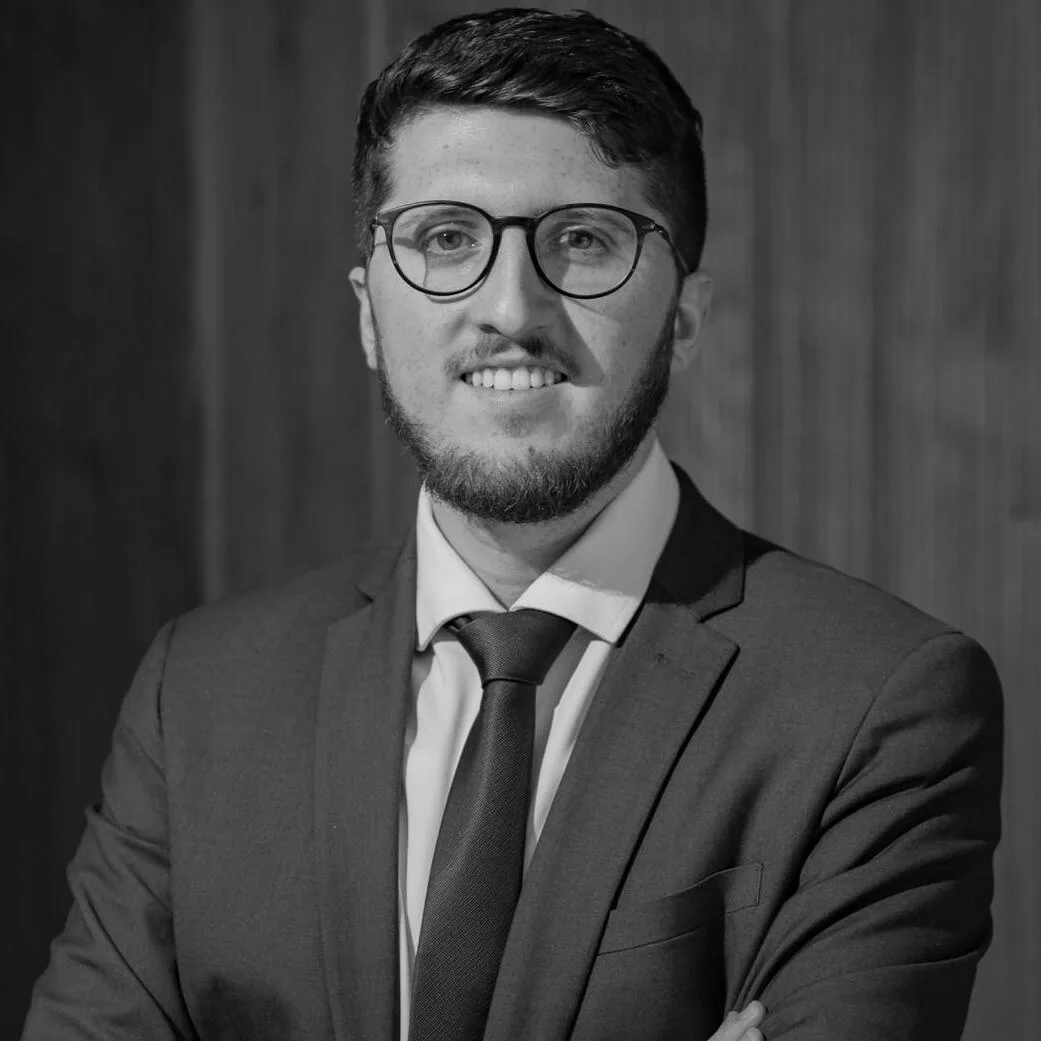
"For a SaaS founder, the hardest part of the Beckham file is not the personal election. It is making the cap table, the foreign parent and the Spanish subsidiary all tell the same, defensible story."
— Jacob Salama · International Tax lawyer, Ilustre Colegio de Abogados de Málaga (nº 11294)
Cap tables, co-founders and vesting
The first thing a SaaS founder brings to Spain is a cap table. Founder shares are usually subject to reverse vesting with a cliff, there is an option pool for early employees, and one or more venture rounds may have introduced preferred shares, liquidation preferences and investor rights. None of this is fatal to the Beckham Regime, but it changes the analysis compared with a founder who owns a single clean Spanish SL. The regime is elected by the individual, yet the individual's tax position is shaped by what they hold and how it was granted.
Vesting matters because it affects when value is considered to accrue and how a later disposal is characterised. A co-founder who is still vesting at the moment of relocation is in a different position from one who is fully vested. Where the shares are in a foreign parent rather than a Spanish company, the source of any future gain and the interaction with the Beckham "Spanish-source only" logic for the covered years becomes central. The practical takeaway is simple: map the cap table before you map the tax plan, because the cap table often dictates which route and which characterisation are realistic.
Map the cap table before you map the tax plan — the equity you hold usually dictates which Beckham route is realistic.
ISOs, RSUs and equity compensation
Equity compensation is where SaaS founders most often assume too much. It is tempting to think that because Beckham gives a 24% rate on the general base, all equity income arrives pre-wrapped at 24%. It does not. Incentive stock options (ISOs), non-qualified options, RSUs and founder equity are different instruments with different timing and different Spanish characterisation. Some elements can fall into the qualifying working-income logic; others behave as savings income or as later capital gains. A grant made by a foreign parent to a co-founder now working in Spain also raises source and cross-border questions that a purely domestic grant would not.
Because this is technical and instrument-specific, it deserves its own review rather than a rule of thumb. Our dedicated guide on the Beckham Regime and stock options / RSUs works through how these grants interact with the special regime, the vesting and exercise moments, and the difference between compensation for work and a gain on the underlying shares. The point to hold onto here is that equity is not a single line item: a founder's ISOs, RSUs and founder shares can each land in a different tax box, and the plan should model them separately rather than as one blended "equity" number.
Why ENISA fits a scalable SaaS product
For a scalable SaaS product, the innovative entrepreneur route is frequently the most natural pathway into the Beckham Regime. This route does not turn on holding a director title; it turns on whether the entrepreneurial activity is innovative and of special economic interest, evidenced by a favourable report. A SaaS product with a genuine technical component, a scalable model, recurring revenue and a defensible product story is often a strong candidate precisely because the innovation is real and documentable.
The ENISA favourable report is the assessment most founders will encounter as the evidence anchor for this route. It is designed to test innovation and economic interest, which aligns well with how a venture-oriented SaaS company already describes itself to investors. The overlap is useful: the same product narrative, roadmap and traction that convince a VC can support the innovation case, provided the tax file and the residence file tell the same story. Our detailed note on the ENISA report and the Beckham Regime explains what the report examines and how it fits the entrepreneur route.
That said, ENISA is not automatic and not the only option. A founder whose Spanish company is an active operating business with clients, staff and substance may have an equally strong director-route story. The mistake is to assume the innovation route works for every SaaS founder or that it never does. It should be tested against the actual product, the actual company and the actual role — not assumed from the sector label.
Delaware HoldCo and a Spanish subsidiary
Many venture-backed SaaS companies are built around a Delaware C-corp or another foreign holding company, often because US investors expect it. When a co-founder moves to Spain, the common structure becomes a foreign HoldCo above a Spanish subsidiary that employs the founder and any local team. This can be a clean and legitimate structure, but it introduces questions that a single Spanish SL would never raise.
The foreign HoldCo continues to hold the IP, the investor shares and often the main bank relationships, while the Spanish subsidiary performs development, product or commercial work. The founder's Beckham file then has to explain the relationship between the two entities: who does what, where the value is created, how the founder is paid, and why the Spanish entity has real substance rather than being a shell that exists only to host a tax election. Founders with foreign companies should read this together with our guide for foreign company owners and permanent establishment, because the HoldCo structure is exactly where those risks concentrate.
| Structure element | Typical SaaS setup | Beckham planning point |
|---|---|---|
| Foreign HoldCo | Delaware or other parent holding IP and investor shares | Watch effective management and permanent establishment when the founder relocates |
| Spanish subsidiary | Employs the founder and local product/engineering team | Needs genuine substance, contracts and a real function |
| Founder role | Technical or executive co-founder now based in Spain | Define role, authority and payment consistently with the file |
| Intercompany flows | IP licensing, services, cost-plus development | Transfer pricing must reflect where value is created |
| Equity | Founder shares in the parent, plus option pool | Source and characterisation reviewed separately from salary |
The structure is not the problem in itself. The problem is a structure that looks like a paper exercise. A defensible HoldCo–subsidiary arrangement has real people, real contracts and a real reason for each entity to exist.
Permanent establishment and effective management
The single most underestimated risk for a relocating SaaS co-founder is permanent establishment and place of effective management. When a technical or executive co-founder moves to Spain and continues to run the foreign company from there — signing contracts, directing strategy, managing the team, making the key decisions — the foreign company can be treated as having a taxable presence in Spain, or its place of effective management can be seen to have shifted to Spain. Either outcome can pull part of the parent's profits into the Spanish tax net, which is often exactly what the structure was meant to avoid.
This is not a reason to abandon the move; it is a reason to plan the founder's role deliberately. Where decisions are actually taken, who has authority to bind the company, whether board meetings and strategic direction sit with the founder in Spain, and how the Spanish subsidiary is positioned all feed into the analysis. A founder who assumes that "the company is Delaware, so Spain does not apply" is exposed. The Beckham election protects the individual's personal income position for the covered years; it does not shield the foreign company from Spanish corporate exposure created by the founder's own activity.
Transfer pricing between entity and parent
Once there is a Spanish subsidiary and a foreign parent, the two entities transact with each other, and those transactions have to be priced as if between independent parties. Typical flows for a SaaS group include a development or engineering services charge from the Spanish entity, an IP licence or royalty from the parent, cost-plus arrangements for the local team, and management or support services. Transfer pricing asks whether these prices reflect where value is genuinely created.
For a founder-led group this is sensitive because the founder is on both sides: shaping the parent's strategy and running the Spanish operation. If the Spanish subsidiary performs significant development and product work but is compensated as a thin cost centre, that can be challenged. If value is attributed to the parent that is really created by the founder's team in Spain, that can be challenged too. The Beckham file and the transfer-pricing position should agree with each other. It is difficult to argue that the founder is a genuine displaced worker performing substantial work in Spain while simultaneously pricing the Spanish entity as if almost nothing of value happens there.
Salary, dividends and a future exit
A SaaS founder's income is a mix, and each part is characterised differently. Salary or director remuneration from the Spanish entity may fit the working-income logic of the special regime. Dividends from founder shares are generally analysed as savings income, not as the flat general-base income people hope for. Phantom shares or cash-settled stock appreciation rights need their own review too: they may be described as equity in the compensation plan while behaving more like variable remuneration when the payout trigger occurs, as explained in our guide to phantom equity under the Beckham Regime. And the event most founders are actually building toward — a share sale, secondary or acquisition exit — is usually a capital-gains question, separate again, and heavily dependent on where the shares sit and when the disposal happens relative to residence and the Beckham period.
This matters for timing. A founder approaching a liquidity event should understand how the exit interacts with becoming Spanish tax resident and with the covered-years logic of the regime, ideally before relocating rather than after. Treating salary, dividends and a future exit as one undifferentiated pot is the classic planning error. For the framework that ties all of this together, our pillar guide on applying for the Beckham Regime in Spain sets out the eligibility conditions and the election mechanics that every founder route sits on top of.
VC funding, the narrative and RETA
Founders often ask whether raising venture capital helps or hurts the Beckham and ENISA narrative. The honest answer is that it can do both. Institutional funding is powerful evidence that a project is innovative and of economic interest — sophisticated investors have backed it — which can strengthen the entrepreneur route and the innovation story. But funding also complicates the corporate picture: it usually introduces a foreign parent, preferred shares, investor governance and a cap table that no longer belongs to the founders alone. The narrative has to accommodate that complexity honestly rather than pretend the founder is a simple solo entrepreneur.
Finally, Social Security. Beckham is an income-tax regime; it does not decide the founder's contribution position. A founder who controls the company and acts as a director or performs management functions is often classified in the self-employed scheme (RETA) as a founder-director, even while electing Beckham for income tax. For US and other non-EU founders there are also totalization and coverage questions to resolve. The clean version of the plan treats residence route, Article 93 eligibility, corporate structure, transfer pricing and Social Security as five coordinated workstreams, not one.
Frequently asked questions
Does raising venture capital help my ENISA and Beckham case?
It can help by evidencing that the project is innovative and of economic interest, but it also introduces a foreign parent, preferred shares and investor governance. The narrative has to reflect that complexity honestly. Funding is supporting evidence, not an automatic qualification.
Will my Delaware HoldCo be taxed in Spain if I move here?
Possibly, if your work in Spain creates a permanent establishment or shifts the place of effective management. Beckham protects your personal income position for the covered years; it does not shield the foreign company from Spanish corporate exposure you create by running it from Spain.
Are my RSUs and ISOs taxed at the flat 24% Beckham rate?
Not automatically. ISOs, RSUs and founder shares are different instruments with different timing and characterisation. Some elements may fit the working-income logic; others are savings income or later capital gains. They should be modelled individually.
How is a future share sale or secondary treated?
Generally as a capital-gains question, separate from salary and dividends, and heavily dependent on where the shares sit and when the disposal happens relative to Spanish residence and the Beckham period. Exit timing is worth reviewing before relocation.
Do I need Spanish Social Security as a founder-director?
Usually in some form. A founder who controls the company and acts as director or manager is often classified in the self-employed scheme (RETA), even under Beckham. Social Security is a separate analysis from the income-tax regime.
General information, not legal, tax or Social Security advice. Sources reviewed include Article 93 of the Spanish Personal Income Tax Act (IRPF), the Startup Law 28/2022, the ENISA favourable report used for the innovative-entrepreneur route, Agencia Tributaria (AEAT) guidance on Modelo 149 and the special displaced-worker regime, and Spanish Social Security guidance on founder-directors and self-employed registration.